Complete U.S. E-Bike Laws Guide (2025): Must-Know State-by-State Breakdown

Complete U.S. E-Bike Laws Guide (2025)
The Complete U.S. E-Bike Laws Guide is designed to help riders, commuters, and
policymakers navigate the rapidly changing landscape of electric bike regulations in America.
E-bikes are no longer a niche product — they have become a mainstream transportation choice for
millions of people looking for cleaner, faster, and more affordable alternatives to cars and
public transit. From busy urban centers to small towns, riders are discovering the convenience
of e-bikes for commuting, exercising, and even replacing short car trips.
However, as adoption has grown, the legal framework surrounding e-bikes has become increasingly
complex. Some states have fully embraced the three-class system, while others continue to treat
e-bikes like mopeds or even motorcycles. What is considered legal in California may be
restricted in New York, and what is allowed in Texas might be banned on certain trails in
Colorado. This inconsistency can create confusion for riders who travel across state lines or
simply want to understand where and how they can ride legally. That is why the
Complete U.S. E-Bike Laws Guide (2025) is an essential resource for anyone
who owns or is considering buying an e-bike.
By consolidating the latest legislation, clarifying state-by-state rules, and outlining the most
common requirements like helmet laws, age limits, and trail access, the
Complete U.S. E-Bike Laws Guide ensures that riders stay informed and compliant.
Whether you are a recreational cyclist, a student commuting to class, or a delivery worker who
relies on an e-bike for income, knowing the laws helps you stay safe, avoid fines, and ride with
confidence. In 2025, understanding these regulations is not just helpful — it is critical for
making the most out of your e-bike experience in the United States.
Read More!
🚦 E-Bike Classification Explained
One of the most important parts of the Complete U.S. E-Bike Laws Guide is understanding
how electric bikes are classified. Today, most states have adopted a widely recognized
three-class system that helps distinguish e-bikes from mopeds, scooters, and motorcycles.
This framework was designed to give riders more clarity while ensuring bike paths, roads,
and shared trails remain safe for pedestrians and traditional cyclists.
- Class 1: Pedal-assist only, with the motor cutting off at 20 mph.
These are the most beginner-friendly and are often legal on multi-use paths, making them
popular for city commuting and recreational trail riding. - Class 2: Throttle-enabled, with a maximum speed of 20 mph.
Favored by casual riders and those who prefer the option to ride without pedaling,
though in some states their use is restricted to certain paths. - Class 3: Pedal-assist up to 28 mph. Designed for faster commutes,
these bikes are typically restricted to roads and bike lanes. Many states require helmets
for younger riders, and some even impose age limits for this class.
However, not every state has fully embraced this system. In certain regions, outdated moped
definitions are still applied to e-bikes, which can create confusion. This may result in
additional requirements like registration, insurance, or license plates. That’s why the
Complete U.S. E-Bike Laws Guide is so valuable in 2025—it provides clarity
on where these classifications apply and what rules you need to follow depending on where you ride.
🗺️ State-by-State Highlights (2025)
One of the most valuable features of the Complete U.S. E-Bike Laws Guide
is its ability to show how rules can differ dramatically from state to state.
While federal guidelines provide a baseline for e-bike definitions, each state
has the authority to regulate access, speed limits, and licensing requirements.
Below are key highlights that demonstrate how diverse—and sometimes confusing—
the landscape of e-bike regulation can be in 2025.
- California: Recognizes all three classes. No license or registration is required,
but helmets remain mandatory for Class 3 riders under 18. - New York: Allows Class 1 and 2 statewide. Class 3 is permitted only in select areas
like New York City, where local restrictions may apply. - Texas: Relies primarily on federal definitions, but municipalities have the power
to regulate bike path and trail access. - Florida: Class 1 and 2 are generally permitted in bike lanes, while Class 3
riders must be at least 16 years old. - Illinois: Similar to California’s law but prohibits Class 3 e-bikes from
multi-use trails. - Colorado: Fully recognizes the three-class system. Class 1 and 2 are allowed
on bike paths, but Class 3 bikes are restricted to roads. - Oregon: Riders under 16 cannot operate Class 3 e-bikes. Helmets are required
for all minors regardless of class. - Washington: Permits all three classes but bans Class 3 e-bikes from sidewalks
and certain shared-use trails. - Arizona: Among the most lenient states, with minimal restrictions. Helmets
are required only for riders under 18. - Massachusetts: Still classifies many e-bikes as mopeds, requiring
registration and insurance for higher-speed models.
These examples show why the Complete U.S. E-Bike Laws Guide is so essential
for riders, commuters, and business owners. Knowing the laws in your specific state
can prevent costly mistakes, ensure compliance, and create a safer riding environment.
For a deeper breakdown of every state’s legislation, you can visit the official
PeopleForBikes e-bike legislation tracker
.
📋 Common Requirements Across the U.S.
When reviewing the Complete U.S. E-Bike Laws Guide, it becomes clear that while each state
sets its own rules, there are several recurring requirements that shape how riders
can safely and legally operate e-bikes in 2025. Understanding these common themes
helps commuters, recreational cyclists, and business owners prepare no matter
where they ride.
- Helmet laws: Most states require helmets for minors and for all Class 3 riders.
A growing number of states are expanding these rules to cover every e-bike user,
regardless of age or class. - Licensing and registration: Although rare, some states still categorize e-bikes
alongside mopeds. This can mean mandatory registration, license plates, or even
insurance—particularly for high-speed models. - Trail and path access: Many jurisdictions restrict Class 3 e-bikes from multi-use
trails to prevent conflicts with pedestrians, joggers, and traditional cyclists.
Class 1 and Class 2 models are more widely accepted on shared-use paths. - Local control: Even if state law is permissive, counties and municipalities can
enforce stricter rules. Riders often need to check local ordinances in addition to
statewide regulations.
These recurring themes highlight why the Complete U.S. E-Bike Laws Guide is indispensable
for riders in 2025. With more states expected to adopt the three-class system, the push
toward nationwide consistency continues—but for now, variations remain significant.
“Understanding local laws isn’t just a formality—it’s essential to staying safe,
compliant, and confident while riding.”
Suggested topics:
E-Bikes and Batteries Recycling
AI and Smart Sensors
Smart Urban Riding Etiquette
E-Bike Storage Solutions
Puncture-Resistant E-Bike Tires
🎬 U.S. E-Bike Laws Explained (2025)
🎥 Watch: This video complements the Complete U.S. E-Bike Laws Guide by
breaking down key restrictions, classifications, and state-by-state differences that every
rider should know in 2025.
💡 Practical Tips for E-Bike Riders in 2025
Beyond understanding laws, riders should adopt best practices to stay safe and compliant:
- Always check the e-bike class and confirm which paths, trails, and lanes are allowed.
- Wear reflective gear and lights, especially for Class 3 e-bikes used in traffic.
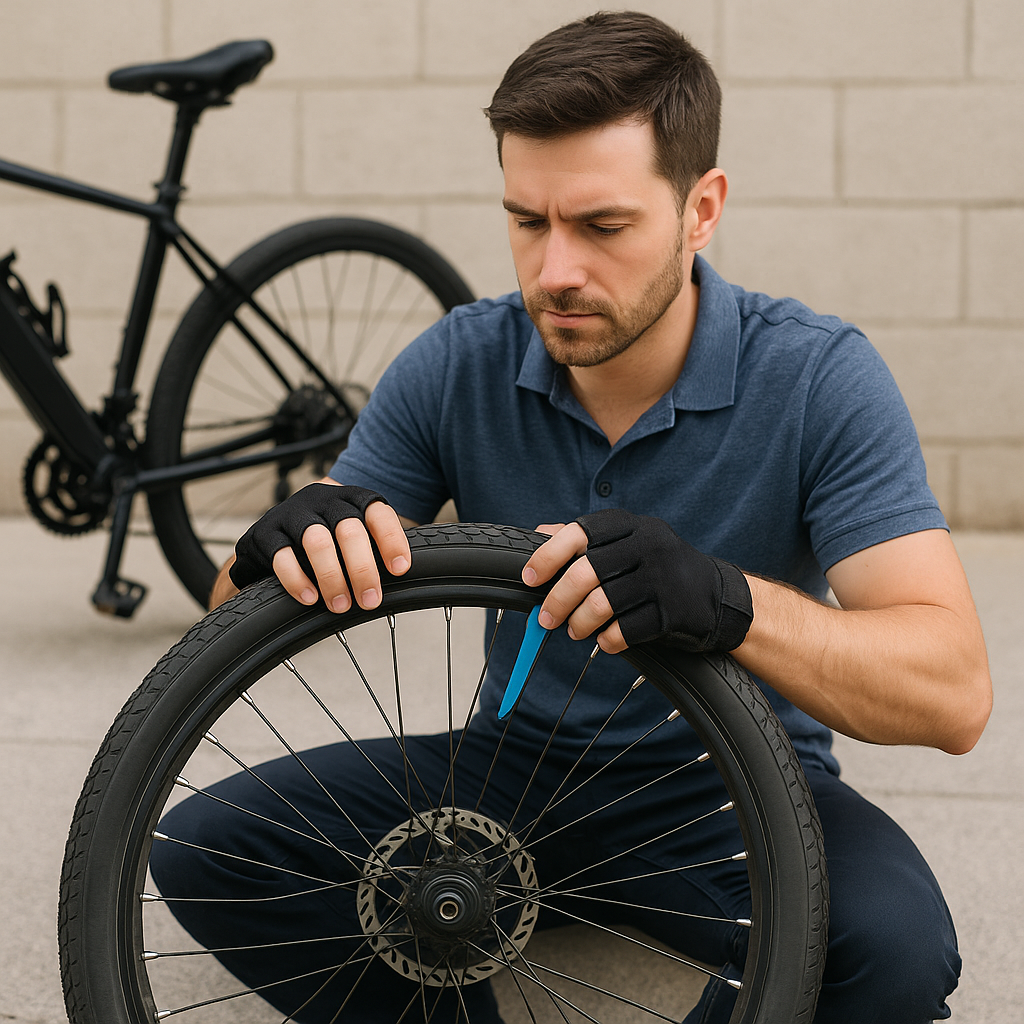
- Perform regular maintenance on brakes, tires, and battery to avoid malfunctions on the road.
- Know local helmet laws and age restrictions to prevent fines.
- Consider insurance for high-speed or commercial-use e-bikes.
Incorporating these tips ensures a safer and more enjoyable riding experience while fully complying with the
Complete U.S. E-Bike Laws Guide.
🚴 Looking Ahead
The evolution of e-bike legislation in the United States is still in motion. Much like the early
days of automobile laws, the rules began fragmented, with each state setting its own standards,
and only over time became more unified. According to the Complete U.S. E-Bike Laws Guide,
2025 is shaping up to be a turning point: more states are adopting the three-class system,
and discussions about federal guidelines are gaining traction. This trend points toward a
future of greater clarity and consistency for riders across the country.
For riders, the coming years will bring both challenges and opportunities. Cities are expected
to invest in improved bike infrastructure, expand dedicated lanes, and enforce clearer signage
about where each class of e-bike may be ridden. At the same time, stricter enforcement and
potential updates to licensing or insurance requirements could become part of the conversation.
By following the Complete U.S. E-Bike Laws Guide, commuters and recreational
cyclists can stay ahead of these changes and ensure they remain both safe and compliant.
Until nationwide standards are fully established, the safest approach is simple: know your class,
wear a helmet, and always check both state and local ordinances before you ride. A few minutes
of research can protect you from costly fines, prevent unnecessary risks, and give you peace of
mind that you’re riding responsibly. The Complete U.S. E-Bike Laws Guide exists
precisely to make this process easier and more reliable for every rider.
🔮 Future Trends in U.S. E-Bike Legislation
With e-bike adoption soaring, policymakers are considering unified federal guidelines,
expanded infrastructure funding, and updated regulations for safety and liability.
The Complete U.S. E-Bike Laws Guide will continue to evolve alongside these trends,
offering riders the latest updates on:
- National standards for e-bike classifications.
- Consistent helmet and age requirements across states.
- Expanded trail and lane access for all classes.
- Potential integration of smart e-bike registration and safety tracking.
🛠️ Want to Stay Legal on Your E-Bike?
❓ Frequently Asked Questions (FAQ) about E-Bikes and Urban Commuting in 2025
Are e-bikes suitable for daily commuting?
Do I need a license to ride an e-bike in the U.S.?
How far can an e-bike travel on a single charge?
Are helmets required when riding e-bikes?
Can I ride an e-bike on bike paths and trails?
How fast can e-bikes go?
Are e-bikes safe for city traffic?
How much does an e-bike cost in 2025?
What maintenance do e-bikes require?
Can I charge my e-bike at public charging stations?
Are e-bikes environmentally friendly?
What is the lifespan of an e-bike battery?






I don’t think the title of your article matches the content lol. Just kidding, mainly because I had some doubts after reading the article. https://accounts.binance.info/register-person?ref=IHJUI7TF
Your point of view caught my eye and was very interesting. Thanks. I have a question for you. https://www.binance.info/register?ref=IHJUI7TF
Thank you for your sharing. I am worried that I lack creative ideas. It is your article that makes me full of hope. Thank you. But, I have a question, can you help me?