Master Electric Scooter Motors: Hub, Belt, Chain & Dual Drive Made Simple (2025 Guide)
The Ultimate Guide to Electric Scooter Motors: Types, Pros, and Cons
Electric scooters are surging in popularity worldwide, and one of the most important decisions a rider can make is choosing the right electric scooter motors. The motor you select has a direct impact on key performance factors including acceleration, top speed, hill‑climbing ability, energy efficiency, noise levels, and long-term maintenance requirements. Whether you navigate busy urban streets, tackle steep inclines, or enjoy occasional off-road rides, understanding the different electric scooter motors is essential to optimize your riding experience. Learn more about electric scooter technology on Electrek’s guide to electric scooters.
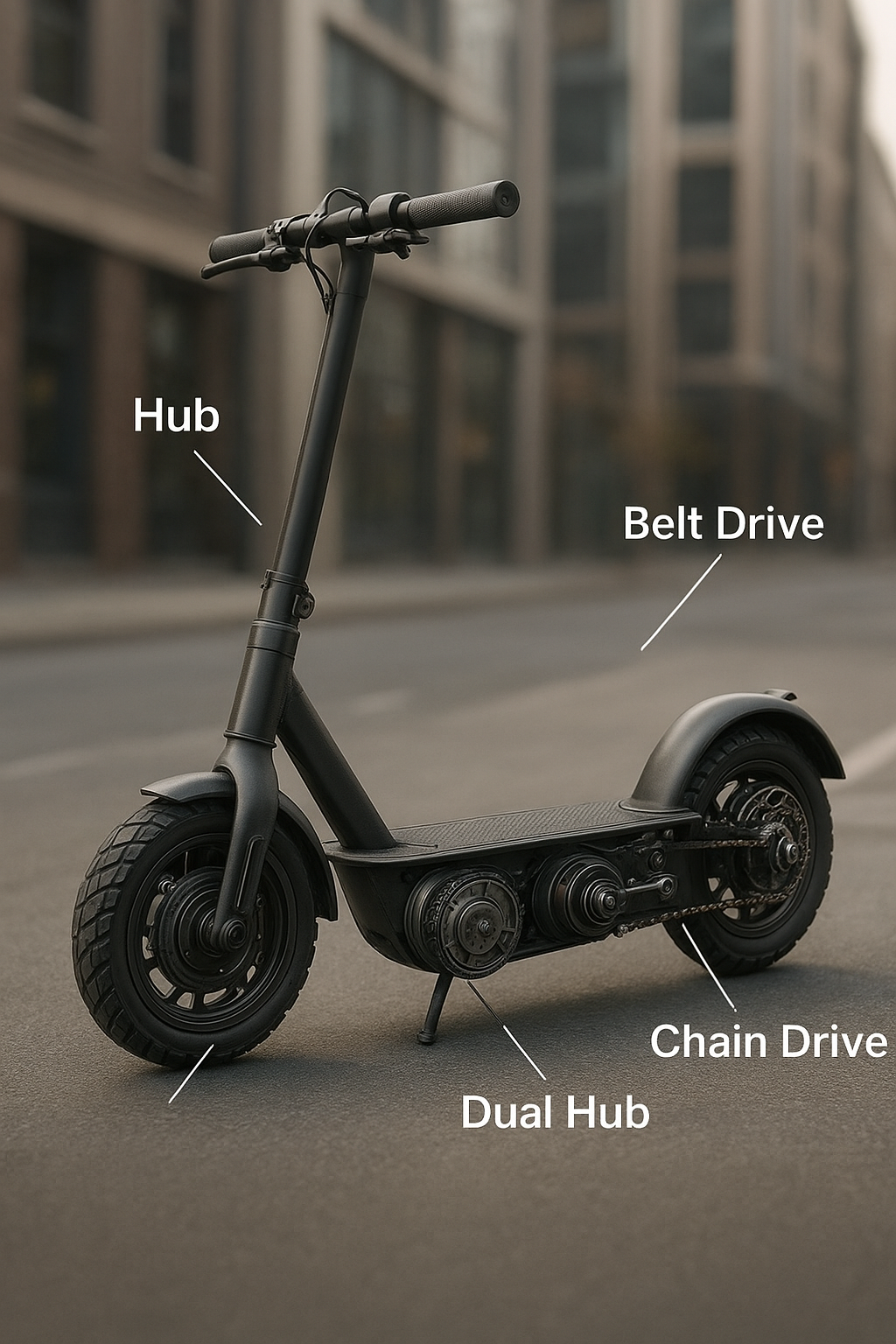
In 2025, the market offers several main types of electric scooter motors: hub motors (both gearless and geared), belt-driven motors, chain-driven motors, and dual hub motors. Each type brings unique advantages and trade-offs in terms of torque, weight, quietness, and maintenance. This comprehensive guide explores the characteristics of each motor type, helping you match your scooter to your commuting needs, riding style, and budget. For more technical insights, check out Electric Scooter Guide – Motor Types. Additionally, see our internal guide on batteries to complement your motor choice.
Read More!
Why the Motor Matters in an E‑Scooter
The motor determines your scooter’s speed and acceleration, torque for hills, energy efficiency, noise level, and maintenance needs. If you commute daily, climb grades, or ride off‑road, choosing the right motor will change your experience more than any other single component.
Main Types of Electric Scooter Motors
Understanding the different electric scooter motors is crucial for choosing the right motor for your riding style and environment. Each motor type has distinct characteristics affecting acceleration, torque, efficiency, noise levels, and maintenance, making it important to match your scooter to your needs.
1) Gearless Hub Motor (Direct Drive)
How it works: The motor is integrated directly into the wheel, eliminating internal gears. This design provides a smooth, silent ride and supports regenerative braking.
- Pros: Ultra‑quiet, extremely durable, low maintenance, compatible with regenerative braking for better energy efficiency.
- Cons: Heavier than other motors, produces less torque at low speeds, and struggles on steep inclines.
- Best for: Urban commuters and riders who prioritize silence, simplicity, and low upkeep.
2) Geared Hub Motor
How it works: Inside the hub, a set of planetary gears multiplies torque, allowing better hill climbing and responsive acceleration from a standstill.
- Pros: Lightweight, strong low‑end torque, excellent for hilly terrain.
- Cons: Produces more noise than gearless motors; gears wear over time, requiring occasional maintenance.
- Best for: Riders in hilly cities, heavier commuters, or anyone needing strong uphill performance.
3) Belt Drive Motor
How it works: Power from the motor is transmitted to the wheel through a rubber belt and pulleys, providing a smooth and controlled ride experience.
- Pros: Smooth operation, relatively quiet, easy belt replacement, low vibration.
- Cons: Belts are wear items and may slip or degrade in dusty or wet conditions.
- Best for: Performance-focused scooters where refinement, acceleration, and smooth power delivery matter.
4) Chain Drive Motor
How it works: Uses a traditional chain and sprocket system to transfer motor power to the wheel, offering high torque and strong mechanical reliability.
- Pros: Very high torque capacity, ideal for off-road or heavy-duty use, durable under tough conditions.
- Cons: Noisier, requires regular lubrication, tension adjustments, and cleaning.
- Best for: Riders tackling rugged terrain, off-road adventures, or those prioritizing raw power over quiet operation.
5) Dual Hub Motor (Front + Rear)
How it works: Combines two hub motors—one in the front wheel and one in the rear—for all-wheel drive, offering superior acceleration and stability.
- Pros: Exceptional acceleration, excellent hill-climbing ability, enhanced stability and traction under load.
- Cons: Heavier, more expensive, and consumes more battery power than single-motor setups.
- Best for: High-performance scooters, riders who mix urban and off-road terrain, and enthusiasts who demand peak power and control.
When choosing electric scooter motors, consider your typical riding environment, load requirements, and personal priorities such as noise, maintenance, and torque. Matching the motor type to your needs ensures optimal performance, efficiency, and ride enjoyment.
Electric Scooter Motor Components & Accessories
When discussing electric scooter motors, it’s important to understand that performance and longevity are not determined by the motor alone. Several key components and accessories work together with the motor to ensure smooth operation, efficiency, and durability:
- Controller: The controller regulates the power delivered from the battery to the motor. High-quality controllers improve acceleration smoothness, reduce energy wastage, and can enhance overall responsiveness of your electric scooter motors. Advanced controllers may also support features like regenerative braking or torque control.
- Battery: Even the best electric scooter motors cannot perform optimally without sufficient power. A high-capacity battery (measured in amp-hours) sustains longer rides, provides consistent torque for climbing hills, and reduces strain on the motor. Batteries with higher voltage can increase top speed and acceleration.
- Cooling Systems: Some electric scooter motors generate significant heat during aggressive or extended rides. Motors with built-in cooling systems, such as fins, heat sinks, or liquid cooling, prevent overheating, maintain performance, and extend motor life.
- Braking Systems: Efficient braking protects your electric scooter motors from excessive strain. Regenerative braking, available on many hub motors, converts kinetic energy back into battery power, improving range and reducing wear on the motor and mechanical brakes.
- Transmission Components: For geared, belt, or chain-driven electric scooter motors, pulleys, chains, sprockets, and belts directly influence power delivery. Proper tension, alignment, and lubrication ensure smooth operation, maximize torque, and extend component lifespan.
Understanding these components and how they interact with your electric scooter motors helps you make informed choices when selecting a scooter, upgrading parts, or performing maintenance. Optimizing both the motor and its supporting systems ensures peak performance, longer life, and a superior riding experience.
Comparison Table: Electric Scooter Motor Types
Choosing the right electric scooter motors is crucial because each motor type has unique characteristics affecting performance, maintenance, and overall riding experience. The following comparison table highlights the key differences between the most common motor types used in electric scooters:
| Motor Type | Weight | Torque / Climbing | Noise Level | Maintenance | Common Use |
|---|---|---|---|---|---|
| Gearless Hub (Direct Drive) | Heavy | Medium | Very quiet | Very low | City commuting, flat terrain, long rides |
| Geared Hub | Light | High | Moderate | Medium (gears wear out over time) | City commuting + hilly areas, heavier riders |
| Belt Drive | Medium | Medium | Quiet | Medium (belt replacement required periodically) | Performance-focused scooters, smooth acceleration, refined ride |
| Chain Drive | Heavy | Very High | Loud | High (requires regular cleaning and lubrication) | Off-road, rugged terrain, high-power scooters |
| Dual Hub (Front + Rear) | Heavy | Very High | Quiet | Low | High-performance scooters, mixed urban/off-road use |
Quick tip: Selecting the right electric scooter motors depends on your typical riding conditions. For flat, urban commutes, a single gearless hub motor provides quiet, nearly maintenance-free operation. Hilly areas or heavier riders benefit from a geared hub or dual hub motor for stronger torque and better hill climbing. For off-road enthusiasts, chain drive motors deliver unmatched torque and durability under rugged conditions. Understanding these differences ensures you choose the motor type that maximizes efficiency, longevity, and riding enjoyment.
Tips for Choosing the Right Electric Scooter Motors
Selecting the right electric scooter motors is crucial for achieving optimal performance, efficiency, and riding enjoyment. While the motor type is central, several personal and environmental factors determine which motor will best suit your needs:
- Weight of Rider: Heavier riders require motors with higher torque to maintain smooth acceleration and hill-climbing performance. Choosing a motor that matches your weight ensures longevity and prevents overheating of the electric scooter motors.
- Terrain: Your typical riding environment strongly affects motor choice. Steep hills, uneven streets, or off-road trails favor geared hub, chain drive, or dual hub electric scooter motors for improved torque and control.
- Maintenance Tolerance: Busy commuters or casual riders often prefer low-maintenance gearless hub or belt drive motors, which require minimal upkeep while delivering reliable performance.
- Ride Frequency: Daily riders should prioritize durable electric scooter motors that balance power output with energy efficiency, ensuring the battery and motor endure regular use without rapid wear.
- Noise Sensitivity: If you commute in urban environments, quieter motors such as gearless hub or belt drive electric scooter motors are preferable. These options reduce disturbance and contribute to a more pleasant riding experience.
By considering these factors, you can select electric scooter motors that match your riding style, terrain, and maintenance preferences, ultimately enhancing safety, efficiency, and enjoyment on every ride.
Maintaining Your Electric Scooter Motors
Proper maintenance of your electric scooter motors is essential for extending motor life, ensuring safety, and preserving optimal performance. Even the most advanced motor will degrade prematurely without regular care and attention.
- Belts and Chains: For belt drive or chain drive electric scooter motors, keep belts and chains correctly tensioned and lubricated. Proper alignment reduces wear, prevents slippage, and ensures efficient power transfer.
- Noise and Vibration Checks: Listen for unusual sounds or vibrations during rides. Grinding, rattling, or squealing can indicate motor wear, gear issues, or misaligned components in your electric scooter motors.
- Cleaning: Remove dust, dirt, and moisture from the motor housing regularly. Contaminants can cause overheating, reduce efficiency, and accelerate wear on internal components.
- Electrical Connections: Ensure the controller, battery, and motor connections are secure and free from corrosion. Loose or dirty connections can lead to inconsistent performance, overheating, or failure of your electric scooter motors.
- Geared Hubs: For geared hub electric scooter motors, inspect internal gears periodically if accessible. Proper lubrication and timely maintenance prevent excessive wear and maintain smooth torque delivery.
Regularly maintaining your electric scooter motors not only prolongs motor life but also improves energy efficiency, ride smoothness, and safety. Riders who follow consistent care routines enjoy reliable performance and can avoid costly repairs or motor replacements.
🎥 Watch: A comprehensive overview of the different types of electric scooter motors—including hub, belt, chain and dual‑hub systems—explaining how they work, what their strengths and weaknesses are, and how to pick the right one for your riding style.
Which Electric Scooter Motors Are Best for You?
Choosing the right electric scooter motors depends on your typical riding conditions, priorities, and performance expectations. Each motor type offers specific advantages suited to different riders:
- City Commuters: Gearless Hub electric scooter motors are ideal for urban environments. They are silent, low-maintenance, and provide a smooth, reliable ride for short and long commutes on flat terrain.
- Hilly Terrain: Geared Hub or Dual Hub electric scooter motors excel at low-end torque, allowing heavier riders or those navigating steep inclines to climb hills efficiently without straining the motor.
- Performance-Focused Riders: Dual Hub or Belt Drive electric scooter motors deliver fast acceleration and smooth power transfer. These motors are perfect for riders seeking a high-performance experience on urban roads or mixed terrain.
- Rugged / Off-Road: Chain Drive electric scooter motors provide unmatched torque and durability, making them the top choice for off-road trails, rugged terrain, and riders who prioritize strength over silence.
By evaluating your commute, terrain, and riding preferences, you can select electric scooter motors that maximize efficiency, performance, and long-term reliability. The right motor ensures you enjoy every ride safely, smoothly, and with optimal control.
❓ Frequently Asked Questions (FAQ) about Electric Scooter Motors
What are the main types of electric scooter motors?
Which motor is best for city commuting?
Are geared hub motors suitable for hills?
What maintenance is required for belt drive motors?
How does a dual hub motor work?
Which motor is best for off-road riding?
Do electric scooter motors require cooling systems?
Can I use regenerative braking with all motor types?
How do I choose the right motor for my weight?
What routine maintenance keeps my electric scooter motor in top condition?







Your point of view caught my eye and was very interesting. Thanks. I have a question for you.
Your article helped me a lot, is there any more related content? Thanks! https://www.binance.com/register?ref=QCGZMHR6