Future E-Bike Battery Technology Breakthrough: The Powerful New Batteries Set to Replace Lithium in Electric Bikes and Scooters
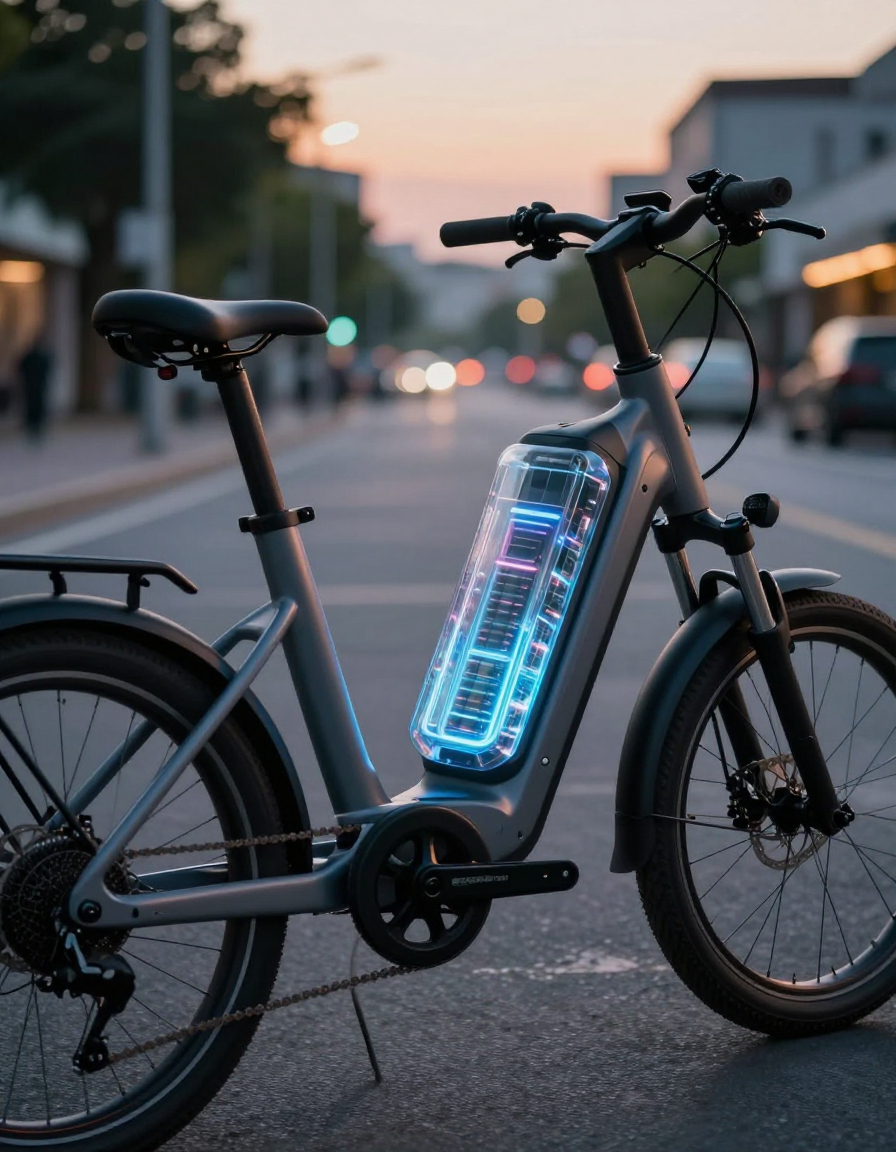
Future E-Bike Battery Technology: Which Powerful New Batteries Will Replace Lithium in E-Bikes and Electric Scooters?
The electric mobility revolution is accelerating at an unprecedented pace, and Future E-Bike Battery Technology is the driving force behind this transformation.
As cities shift toward sustainable transportation and riders demand longer range, faster charging, and safer systems, innovation in Future E-Bike Battery Technology
has become one of the most critical battlegrounds in the entire micromobility industry.
Today’s e-bikes and electric scooters rely heavily on lithium-ion batteries, but the landscape of Future E-Bike Battery Technology is rapidly evolving.
From advanced Lithium Iron Phosphate (LFP) chemistry and emerging sodium-ion cells to next-generation solid-state batteries, manufacturers are competing to redefine what is possible
in terms of energy density, lifespan, thermal stability, sustainability, and production cost.
The importance of Future E-Bike Battery Technology goes far beyond simply extending riding range. It directly impacts rider safety, urban infrastructure planning,
insurance regulations, shipping restrictions, and even global mineral supply chains. A breakthrough in Future E-Bike Battery Technology could dramatically lower battery costs,
reduce fire risks, minimize environmental impact, and make electric mobility accessible to millions of new riders worldwide.
While lithium-based systems still dominate the market today, the next wave of Future E-Bike Battery Technology may fundamentally reshape performance standards and economic models
across the industry. The question is no longer whether innovation will happen — but which battery chemistry will lead the next era of electric bikes and scooters.
In the sections ahead, we will analyze the strengths and limitations of current lithium-ion batteries, examine the rapid rise of LFP technology, explore the disruptive potential of sodium-ion systems,
and evaluate whether solid-state batteries truly represent the ultimate evolution of Future E-Bike Battery Technology.
The future of personal electric transportation depends on it.
To get the most from your e-bike or electric scooter, understanding, monitoring, and optimizing battery performance is key.
These tools help you evaluate battery health, lifespan, thermal behavior, and energy efficiency — all critical for safe and sustainable riding.
- Battery Calculator — estimate the optimal battery size and range for your e-bike or scooter.
- Battery Cell Analyzer — check the performance and health of individual battery cells.
- Battery Pack Builder — design and configure custom battery packs safely and efficiently.
- Battery Lifespan Calculator — predict your battery’s cycle life and replacement needs.
- Battery Degradation Predictor — track long-term performance loss and optimize charging habits.
- Battery Pack Thermal Calculator — analyze heat buildup and maintain safe operating temperatures.
- Battery Voltage Drop Calculator — measure efficiency and voltage performance under load conditions.
Read More!
Lithium-Ion (Li-ion): The Current Standard in Future E-Bike Battery Technology
Lithium-ion batteries remain the backbone of modern electric mobility and currently define the baseline for Future E-Bike Battery Technology.
For more than a decade, lithium-ion chemistry has powered the rapid growth of e-bikes and electric scooters worldwide, enabling lightweight frames,
extended riding range, and practical daily commuting performance.
The dominance of lithium-ion within Future E-Bike Battery Technology is largely due to its high energy density — meaning it can store
more energy per kilogram compared to most competing chemistries. This allows manufacturers to deliver 40–120 km of range without dramatically increasing
battery weight. Combined with relatively fast charging times and a mature global production ecosystem, lithium-ion has become the industry standard.
Key advantages of lithium-ion in Future E-Bike Battery Technology include:
- High energy density (more range per kilogram)
- Fast charging capability suitable for urban commuters
- Well-established manufacturing infrastructure
- Continuous improvements in Battery Management Systems (BMS)
However, the current generation of lithium-ion batteries also exposes the limitations that are shaping the next phase of
Future E-Bike Battery Technology. Many lithium-ion cells rely on materials such as cobalt and nickel, which raise
environmental, ethical, and geopolitical concerns. Supply chain volatility can directly impact battery prices, making e-bikes
more expensive for consumers.
Safety remains another critical factor. Although modern BMS systems significantly reduce risk, lithium-ion cells are still vulnerable
to thermal runaway if damaged, improperly charged, or manufactured at low quality standards. This safety challenge is one of the primary
forces accelerating innovation in Future E-Bike Battery Technology, especially toward more stable chemistries like LFP and solid-state.
According to the
International Energy Agency (IEA),
global lithium demand is projected to rise sharply over the next decade as electric vehicles scale worldwide.
This surge is pushing researchers and manufacturers to diversify beyond conventional lithium-ion and accelerate breakthroughs in
alternative chemistries within Future E-Bike Battery Technology.
In short, lithium-ion remains the present foundation of Future E-Bike Battery Technology — but its structural limitations
are precisely what make the search for the next dominant battery chemistry so urgent.
Lithium Iron Phosphate (LFP): The Safer Evolution of Future E-Bike Battery Technology
Lithium Iron Phosphate (LFP) is emerging as one of the most important breakthroughs within Future E-Bike Battery Technology.
As safety concerns, cost pressures, and sustainability demands reshape the micromobility industry, LFP chemistry is rapidly positioning itself
as the practical evolution of lithium-based energy storage for e-bikes and electric scooters.
Unlike traditional lithium-ion batteries that rely heavily on nickel and cobalt, LFP uses iron and phosphate — materials that are more abundant,
more stable, and less controversial from an environmental and ethical standpoint. This shift in chemistry is a major step forward in
Future E-Bike Battery Technology, especially for mass-market urban mobility solutions.
While LFP batteries typically offer slightly lower energy density compared to high-nickel lithium-ion cells, they compensate with
dramatically improved thermal stability and exceptional cycle life. In real-world terms, this means safer battery packs,
longer service life, and lower total ownership costs — all critical pillars in the advancement of Future E-Bike Battery Technology.
Why LFP is becoming a cornerstone of Future E-Bike Battery Technology:
- Significantly reduced fire risk due to superior thermal stability
- Longer lifespan (typically 2,000–4,000 full charge cycles)
- No cobalt usage, reducing ethical and supply-chain concerns
- Lower long-term cost thanks to extended durability
- Better tolerance to full charge and deep discharge cycles
For commuter e-bikes and electric scooters — where safety, reliability, and predictable performance matter more than extreme range —
LFP aligns perfectly with the next phase of Future E-Bike Battery Technology. Fleet operators, delivery services,
and daily urban riders benefit significantly from a chemistry that prioritizes stability over maximum energy density.
Another strategic advantage of LFP within Future E-Bike Battery Technology is regulatory alignment. As governments tighten
safety standards for battery transport, storage, and urban charging infrastructure, safer chemistries like LFP become increasingly attractive
for manufacturers seeking long-term compliance.
Over the next 5–10 years, LFP is highly likely to become one of the dominant battery chemistries in Future E-Bike Battery Technology,
particularly in mid-range and commuter-focused models. Rather than completely replacing lithium-ion, LFP represents its safer, more sustainable evolution —
optimized for the realities of everyday electric mobility.
Sodium-Ion: A Game Changer in Future E-Bike Battery Technology?
Among the most disruptive developments in Future E-Bike Battery Technology, sodium-ion batteries are gaining serious attention.
As the electric mobility industry searches for alternatives to lithium, sodium-ion chemistry is emerging as a realistic and scalable solution
that could reshape the economics of e-bikes and electric scooters worldwide.
Unlike lithium, sodium is one of the most abundant elements on Earth. It is widely available, inexpensive, and geographically diversified,
which dramatically reduces raw material dependency risks. This abundance gives sodium-ion a strategic advantage in the evolution of
Future E-Bike Battery Technology, especially as global lithium demand continues to rise and supply chains face increasing pressure.
From a technical perspective, sodium-ion batteries operate on a similar principle to lithium-ion systems, but substitute lithium ions with sodium ions.
This allows manufacturers to adapt much of the existing production infrastructure while moving toward a more sustainable chemistry — a critical factor
in accelerating the adoption of Future E-Bike Battery Technology.
Major manufacturers such as
CATL
have already introduced sodium-ion battery prototypes and early commercial solutions, signaling that this is not a theoretical concept,
but a near-term innovation within Future E-Bike Battery Technology.
Key advantages of sodium-ion in Future E-Bike Battery Technology include:
- Lower raw material cost due to sodium abundance
- Improved cold-weather performance compared to traditional lithium-ion
- Reduced geopolitical supply chain risk
- Potentially safer thermal behavior
- More stable pricing over time
The primary limitation today is energy density. Sodium-ion batteries currently store less energy per kilogram than advanced lithium-ion cells.
This means slightly heavier battery packs for the same range. However, in the context of Future E-Bike Battery Technology,
maximum range is not always the top priority — especially for urban commuters traveling short daily distances.
For city-based electric scooters, delivery fleets, and entry-level e-bikes, sodium-ion could offer the ideal balance between affordability,
durability, and acceptable range. As manufacturing scales and energy density improves, sodium-ion may become one of the strongest contenders
in the next phase of Future E-Bike Battery Technology.
Rather than fully replacing lithium overnight, sodium-ion is likely to coexist within a diversified ecosystem of chemistries —
each optimized for different use cases. But its potential to democratize electric mobility makes sodium-ion one of the most exciting
developments in Future E-Bike Battery Technology today.
Solid-State Batteries: The Holy Grail of Future E-Bike Battery Technology
Solid-state batteries are widely considered the ultimate breakthrough in Future E-Bike Battery Technology.
By replacing the traditional liquid electrolyte found in lithium-ion batteries with a solid electrolyte, this next-generation
architecture dramatically enhances safety, stability, and theoretical energy density. In many ways, solid-state design represents
the most ambitious leap forward in the evolution of Future E-Bike Battery Technology.
The elimination of flammable liquid electrolytes significantly reduces the risk of thermal runaway — one of the main safety concerns
in current battery systems. For urban riders, fleet operators, and regulators, this improvement alone could redefine safety standards
across the micromobility industry and accelerate the adoption of safer Future E-Bike Battery Technology.
Beyond safety, solid-state batteries offer the potential for substantially higher energy density. In practical terms, this could mean
lighter battery packs with longer range — or the same weight with dramatically extended mileage. Such improvements would directly enhance
performance expectations within Future E-Bike Battery Technology, especially for high-end e-bikes and long-range electric scooters.
Major global players, including
Toyota,
are investing billions into solid-state research and development. Their goal is to overcome current technical barriers and move
toward scalable commercialization within this decade — a milestone that could redefine the roadmap of Future E-Bike Battery Technology.
Potential advantages of solid-state systems in Future E-Bike Battery Technology include:
- Ultra-high energy density compared to conventional lithium-ion
- Extremely low fire risk due to non-flammable solid electrolytes
- Faster charging capability with reduced degradation
- Longer battery lifespan and improved cycle stability
- Greater structural flexibility for innovative battery pack design
However, despite their enormous promise, solid-state batteries still face serious manufacturing challenges.
Large-scale production remains complex and expensive, and material stability at scale is still under refinement.
These barriers currently limit widespread deployment in mainstream e-bikes.
In the short term, solid-state solutions are unlikely to immediately replace conventional lithium-based systems in
affordable commuter models. Yet in the long-term vision of Future E-Bike Battery Technology,
solid-state batteries may dominate premium segments, performance e-bikes, and next-generation lightweight urban mobility platforms.
If successfully commercialized at scale, solid-state batteries would not just improve existing systems — they could fundamentally
redefine what riders expect from Future E-Bike Battery Technology, setting new benchmarks for safety, range,
charging speed, and durability across the entire electric mobility ecosystem.

📷 Free e‑bike battery image – showcasing modern electric bike battery pack and components for advanced electric mobility and Future E‑Bike Battery Technology. Source: Pixabay
Will Future E-Bike Battery Technology Replace Lithium Completely?
The short answer: not immediately.
While headlines often suggest that a revolutionary battery breakthrough is around the corner, the reality of
Future E-Bike Battery Technology is more nuanced. The transition away from conventional lithium-based systems
will likely be evolutionary rather than disruptive. Instead of a single chemistry replacing lithium overnight,
Future E-Bike Battery Technology is expected to develop into a diversified ecosystem where multiple battery types
coexist — each optimized for specific performance, safety, and cost priorities.
The electric mobility market is not uniform. Urban commuters, delivery fleets, performance riders, and premium long-range users
all have different expectations. Because of this, Future E-Bike Battery Technology will likely segment into
specialized solutions rather than converge into one universal replacement.
A realistic diversification path for Future E-Bike Battery Technology may look like this:
- LFP for safety-focused urban mobility and high-cycle commuter usage
- Sodium-ion for affordable mass-market scooters and entry-level e-bikes
- Advanced lithium-ion (high-nickel variants) for lightweight performance models
- Solid-state for premium, high-end, and next-generation electric mobility platforms
Lithium itself is unlikely to disappear entirely within the next 10–15 years. In fact, lithium chemistry continues to evolve,
with improvements in energy density, battery management systems, and recycling efficiency reinforcing its role in
Future E-Bike Battery Technology. What will change is not lithium’s existence — but its dominance.
As regulatory pressure increases, supply chains diversify, and sustainability becomes a core purchasing factor,
Future E-Bike Battery Technology will reward chemistries that balance safety, cost stability, and lifecycle durability.
This means lithium will compete rather than control.
In practical terms, riders should expect a multi-chemistry era. Rather than asking whether lithium will be completely replaced,
the smarter question is how Future E-Bike Battery Technology will allocate different battery solutions across
different mobility categories. The future is not about elimination — it is about optimization.
The Sustainability Factor in Future E-Bike Battery Technology
Sustainability is rapidly becoming a defining criterion for evaluating Future E-Bike Battery Technology.
As electric mobility scales globally, the environmental footprint of battery production, usage, and disposal is under intense scrutiny.
Factors such as recycling efficiency, responsible raw material sourcing, lifecycle greenhouse gas emissions, and end-of-life disposal
are now critical benchmarks for determining which battery chemistries will dominate the next generation of e-bikes and electric scooters.
The U.S. Department of Energy
has highlighted the importance of battery recycling programs and the development of domestic, sustainable supply chains as core pillars
for the future of electric mobility. This emphasis directly impacts the evolution of Future E-Bike Battery Technology,
pushing manufacturers to prioritize chemistries that minimize environmental impact while maintaining performance and safety.
In practical terms, chemistries like LFP and sodium-ion are gaining traction within Future E-Bike Battery Technology because
they rely on more abundant and environmentally benign materials. LFP eliminates cobalt entirely, while sodium-ion substitutes lithium with
widely available sodium, reducing the ecological and geopolitical pressures associated with traditional lithium-ion production.
Moreover, sustainable Future E-Bike Battery Technology extends beyond raw material choice.
Battery design, modularity for easy recycling, and extended lifecycle durability all play critical roles in reducing environmental impact.
E-bike manufacturers that integrate these sustainability principles are likely to lead the market, as consumers and regulators increasingly
favor products that align with circular economy principles.
Ultimately, the next wave of Future E-Bike Battery Technology will not only be measured by performance metrics like range and charging speed,
but also by its ecological footprint, safety profile, and recyclability — making sustainability a central factor in shaping the batteries
of tomorrow’s electric mobility landscape.
Suggested topics:
10 Mistakes to Avoid When Buying electric bikes
Complete U.S. E-Bike Laws Guide
E-Bikes and Batteries Recycling
AI and Smart Sensors
Maintain Your E-Scooter
🎥 Watch: A clear breakdown of solid-state and next‑generation battery designs — a core part of Future E‑Bike Battery Technology
that could redefine energy storage for electric bikes and scooters by offering improved safety, range, and performance. :contentReference[oaicite:0]{index=0}
Final Outlook: What RideWattly Readers Should Watch
For riders, manufacturers, and investors keeping an eye on Future E-Bike Battery Technology, the coming decade promises to be profoundly transformative.
The electric mobility landscape will not converge on a single “winner” chemistry; instead, it will evolve into a layered ecosystem of specialized battery solutions,
each optimized for distinct mobility applications, cost profiles, and safety standards.
Understanding the trajectory of Future E-Bike Battery Technology is essential for anyone navigating the rapidly expanding e-bike and electric scooter markets.
Innovations in LFP, sodium-ion, and solid-state batteries are not isolated experiments — they represent strategic responses to performance demands, regulatory pressures,
and sustainability imperatives.
In practical terms, Future E-Bike Battery Technology developments to watch include:
- Greater adoption of LFP-powered e-bikes in urban commuter fleets, where safety, durability, and affordability are paramount.
- The emergence of sodium-ion batteries in cost-sensitive electric scooters and entry-level e-bikes, offering a balance of performance and sustainability.
- Breakthroughs in solid-state batteries targeting premium, high-performance, and long-range e-bikes, potentially redefining range, charging speed, and thermal safety benchmarks.
Beyond raw performance metrics such as range or weight, Future E-Bike Battery Technology will increasingly be evaluated
based on safety, recyclability, lifecycle sustainability, and cost-effectiveness.
Early adopters, fleet operators, and enthusiasts who understand these emerging trends will gain a competitive advantage in selecting vehicles that are future-proof, reliable, and environmentally responsible.
In essence, the future of electric mobility is not solely about batteries that last longer or charge faster.
It is about the holistic integration of advanced chemistries, smart energy management, and sustainable materials.
At the center of this evolution lies Future E-Bike Battery Technology, reshaping how we power personal transportation
and redefining what riders can expect from the e-bikes and scooters of tomorrow.
❓ Frequently Asked Questions (FAQ) about Future E-Bike Battery Technology
What is the focus of future e-bike battery technology?
Which battery types are emerging as alternatives to lithium-ion?
Why is LFP considered safer than traditional lithium-ion?
What advantages do sodium-ion batteries offer?
Are solid-state batteries the future of high-end e-bikes?
Will lithium-ion batteries disappear completely?
How does sustainability impact future e-bike battery technology?
Which battery type is best for urban commuter e-bikes?
How will battery technology affect the cost of e-bikes?
What should riders watch in the next 5–10 years?