Sidewalk Riding Laws & National Park E-Bike Rules – Is It Legal and What Are the Real Risks?
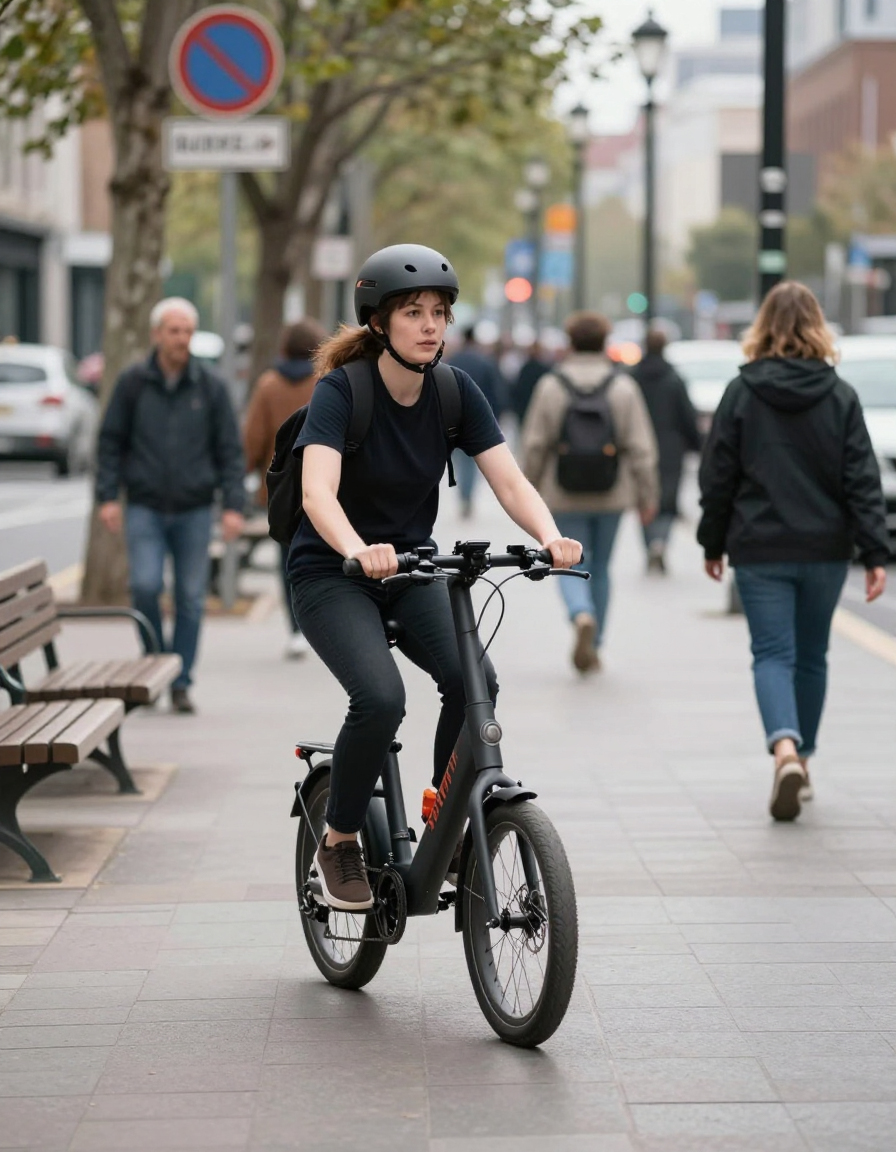
Can You Ride an E-Bike on Sidewalks or in National Parks? Laws, Risks, and What Riders Must Know
Focus Keyword: Sidewalk Riding Laws
Sidewalk riding laws are one of the most misunderstood — and often ignored — aspects of modern micromobility. As electric bikes and scooters rapidly transform urban transportation, more riders are navigating the gray areas between convenience, legality, and public safety. The question sounds simple: Is it legal to ride an e-bike on the sidewalk? But the real answer depends on local regulations, enforcement patterns, and the design of the public space itself.
In many cities, sidewalk riding laws were originally written for traditional bicycles long before electric propulsion became mainstream. Today, with faster acceleration, higher torque, and increased average speeds, those same laws carry even greater importance. What might have once been a minor inconvenience can now present serious safety implications — especially in crowded downtown areas or near schools, parks, and commercial centers.
National parks introduce an entirely different regulatory layer. While some parks allow e-bikes wherever traditional bicycles are permitted, others restrict access based on trail classification or environmental sensitivity. Riders often assume that if something is allowed in the city, it must also be allowed on scenic trails — but that assumption can lead to fines, access violations, or conflicts with hikers and conservation rules.
Beyond the legal framework, there is also a human dimension. Sidewalks are psychologically perceived as pedestrian territory. When riders enter that space, even slowly, it changes the dynamic of safety and trust. Understanding sidewalk riding laws is not just about avoiding penalties — it is about respecting shared infrastructure and preventing avoidable conflict.
This in-depth guide explores sidewalk riding laws, national park e-bike regulations, safety risks, pedestrian psychology, liability exposure, and the practical mistakes riders must avoid. If you operate an e-bike or electric scooter, understanding sidewalk riding laws is not optional — it is a core responsibility of modern riding.
Staying safe while riding an e-bike, scooter, or bicycle requires awareness, preparation, and the right tools.
These resources help you monitor, analyze, and optimize your riding experience while prioritizing road safety and pedestrian respect in compliance with Sidewalk Riding Laws.
- Advanced Digital Speedometer — track your speed accurately to stay within safe sidewalk limits.
- Advanced E-Bike Simulator — practice riding scenarios on sidewalks and urban streets to understand risks and legal compliance.
- Compare E-Bikes & Scooters — select the right vehicle for your commuting style while respecting pedestrians.
- E-Bike Riding Coach — improve balance, control, and awareness for safer sidewalk and road riding.
- AI Ride Analyzer — analyze your rides to detect risky behavior and ensure adherence to sidewalk riding laws.
- Compass — navigate busy urban areas safely and avoid pedestrian-heavy zones.
- Smart Alerts — get notifications for speed, battery, and nearby pedestrian density to ride responsibly.
Read More!
Understanding Sidewalk Riding Laws: Why They Differ Everywhere
Sidewalk riding laws vary significantly between cities, states, and countries — and that variation is not accidental. Local governments design these regulations based on population density, infrastructure quality, pedestrian traffic volume, and historical accident data. What may be perfectly acceptable in a quiet suburban neighborhood could be strictly prohibited in a dense metropolitan downtown.
In many major U.S. cities, riding an e-bike or scooter on sidewalks is either restricted or completely prohibited, especially in commercial districts where foot traffic is heavy. For example, New York City Department of Transportation regulations generally prohibit bicycle riding on sidewalks for adults, with limited exceptions for children. The logic is straightforward: sidewalks in high-density areas are engineered for pedestrian flow, not mixed-speed traffic.
However, in smaller municipalities or suburban areas, sidewalk riding laws may be more flexible. Some towns allow riding unless signage explicitly forbids it. Others permit sidewalk use only when no designated bike lane exists. This regulatory patchwork often confuses riders who travel between cities and assume rules remain consistent.
The deeper reason sidewalk riding laws differ so widely comes down to risk management. Sidewalks are designed with pedestrian-scale visibility, walking-speed expectations, and frequent entry/exit points — storefront doors, driveways, bus stops, and intersections. Once electric propulsion enters the equation — even at moderate speeds of 15–25 km/h — stopping distance increases and reaction time shrinks dramatically. What feels “slow” to a rider can feel sudden and threatening to a pedestrian.
Urban planners also consider liability and insurance implications. Cities with high pedestrian injury rates tend to enforce stricter sidewalk riding laws to reduce legal exposure and protect vulnerable populations such as children, elderly individuals, and people with disabilities.
Key insight: If sidewalk riding laws are unclear in your area, assume restriction until verified through official municipal sources. Legal ambiguity does not protect you from liability — and claiming ignorance rarely prevents fines or responsibility after an incident.
National Park E-Bike Rules: A Different Legal Framework
While Sidewalk Riding Laws shape how and where you ride in urban environments, national parks operate under an entirely different regulatory structure. These areas are governed by federal land management policies that prioritize conservation, wildlife protection, and visitor safety over transportation convenience. That means local permissions do not automatically apply once you enter protected land.
According to the National Park Service (NPS), e-bikes are generally allowed where traditional bicycles are permitted. However, they are not automatically allowed on hiking-only trails, backcountry paths, or environmentally sensitive areas. The key distinction lies in trail classification — not in the fact that the vehicle is electric.
This difference matters more than many riders realize. In cities, debates around Sidewalk Riding Laws usually focus on pedestrian interaction and traffic safety. In national parks, the focus shifts toward environmental preservation and trail sustainability. Even a low-powered Class 1 e-bike can cause trail erosion if used improperly on soft terrain. Wildlife disturbance is another concern, particularly because electric bikes approach more quietly than traditional motorized vehicles.
National park e-bike regulations typically evaluate:
- Trail designation (bike-allowed vs pedestrian-only)
- Motor class (Class 1, 2, or 3)
- Speed capabilities and throttle use
- Local superintendent restrictions specific to each park
Unlike municipal sidewalk riding laws, which may vary block by block, national park policies are often park-specific and can change seasonally. Superintendents have authority to restrict access during high-traffic periods, wildlife migration seasons, or after weather events that damage trails.
Violating national park regulations can result in fines, citations, or temporary access bans — even if Sidewalk Riding Laws in your hometown are relatively permissive. The critical takeaway is this: legality in an urban environment does not equal legality on federal land. Responsible riders must always check official park guidance before entering any trail system.
The Real Safety Risks Behind Sidewalk Riding Laws
Sidewalk Riding Laws were not created to inconvenience riders — they were created to prevent predictable injuries. At their core, Sidewalk Riding Laws exist because sidewalks are engineered for walking-speed movement, not mixed-speed transport. When electric propulsion enters that environment, even at moderate speed, the physics change instantly.
The numbers illustrate the imbalance clearly:
- Pedestrian average walking speed: 4–6 km/h
- Typical e-bike cruising speed: 20–25 km/h
- Acceleration capability: 0–20 km/h within seconds
- Closing-distance reaction window: Often less than 1 second at blind corners
That speed differential means a rider can approach a pedestrian four to five times faster than the pedestrian expects. Human reaction time averages around 0.7–1.5 seconds. At 20 km/h, an e-bike covers roughly 5–6 meters per second. In practical terms, by the time a pedestrian visually registers the rider, there may be almost no safe braking distance left.
Sidewalk infrastructure compounds this risk. Unlike roads or bike lanes, sidewalks are filled with unpredictable elements: storefront exits, café seating, parked cars blocking sightlines, bus shelters, trees, trash bins, and building corners. Each obstruction reduces visibility and shortens decision-making time. A rider traveling even 15 km/h — which may feel slow compared to road riding — dramatically increases potential collision severity in these tight corridors.
This is precisely why Sidewalk Riding Laws tend to be stricter in dense urban centers. The combination of limited width, high foot traffic, and frequent cross-movement creates a high-conflict environment. In many cases, the issue is not reckless riding but simple geometry — sidewalks were never designed to handle motor-assisted acceleration.
Beyond physical collision risk, there is a subtler but equally important issue: territorial perception. Pedestrians psychologically interpret sidewalks as protected space. When a faster vehicle enters that space, it triggers stress responses — even if no contact occurs. Startle reactions can cause sudden lateral movements, which ironically increase the chance of impact.
Understanding the safety foundation behind Sidewalk Riding Laws helps riders recognize that these regulations are rooted in predictable human limitations and spatial design — not in opposition to micromobility itself.
Pedestrian Psychology: “This Space Belongs to My Feet”
One of the least discussed aspects of Sidewalk Riding Laws is not mechanical, legal, or even infrastructural — it is psychological. Sidewalks are deeply encoded in human perception as pedestrian-only environments. From childhood, people learn that roads are for vehicles and sidewalks are for walking. This mental separation creates a powerful sense of territorial safety.
When an electric bike or scooter enters that space — even at low speed — it disrupts that expectation. The human brain reacts instantly to unexpected movement within what it perceives as a protected zone. This reaction can trigger:
- Startle response and sudden lateral movement
- Loss of perceived control over personal space
- Defensive body language (freezing, stepping unpredictably)
- Frustration or anger toward micromobility riders
These reactions are not irrational. They are rooted in evolutionary survival mechanisms. When something moves faster than expected within close proximity, the body prepares for impact. Even if a rider believes they are moving “carefully,” the pedestrian’s nervous system may interpret the situation as a threat.
This is one of the deeper reasons why Sidewalk Riding Laws exist in so many urban centers. Lawmakers understand that safety is not only about collision statistics — it is about perceived security. If pedestrians feel unsafe on sidewalks, the entire purpose of that infrastructure collapses.
The “ownership feeling” pedestrians experience over sidewalks is deeply ingrained. For elderly walkers, parents pushing strollers, children learning to balance, or visually impaired individuals navigating with canes, the sidewalk represents their final predictable mobility corridor. It is often the only space where they do not have to negotiate with faster, heavier vehicles.
When riders ignore Sidewalk Riding Laws, they do more than risk a citation. They weaken public trust in electric mobility as a whole. Negative pedestrian experiences translate into political pressure, stricter enforcement, and reduced acceptance of e-bikes and scooters in cities and parks.
Understanding pedestrian psychology helps riders see that respecting Sidewalk Riding Laws is not merely about compliance — it is about maintaining coexistence in shared urban ecosystems.
National Parks: Environmental and Trail Damage Risks
While Sidewalk Riding Laws focus primarily on pedestrian safety in urban environments, national parks introduce a broader responsibility — environmental preservation. The conversation shifts from human collision risk to ecological impact, trail sustainability, and long-term conservation. Electric bikes may appear lightweight and efficient, but their mechanical characteristics can influence fragile terrain in ways many riders underestimate.
Unlike paved city sidewalks, national park trails are often composed of compacted soil, gravel, sand, or mixed natural surfaces. Electric bikes introduce:
- Higher torque on soft soil, especially during uphill acceleration
- Increased risk of rut formation after rain or seasonal thaw
- Trail widening when riders move off-path to overtake hikers
- Wildlife disturbance due to faster, quieter approach speeds
Torque is a key factor. Even a Class 1 pedal-assist e-bike can generate more sustained climbing force than a traditional bicycle. On sensitive trails, this added force may accelerate erosion, particularly on switchbacks and inclines. Over time, repeated use can alter drainage patterns, deepen grooves, and expand the trail footprint.
Wildlife impact is another often overlooked dimension. Electric bikes approach more quietly than combustion engines, reducing early auditory warning for animals. This can startle wildlife at closer distances, increasing stress responses or causing sudden movement across trails. Responsible riding requires speed moderation and heightened awareness, particularly in habitat-sensitive zones.
The U.S. National Park Service emphasizes minimizing environmental impact through designated trail usage and seasonal restrictions. Even where e-bikes are legally permitted, riders are expected to follow clearly marked routes and avoid closed or restoration areas.
The contrast between Sidewalk Riding Laws and park regulations highlights a broader principle: legality is context-dependent. In cities, the primary concern is pedestrian coexistence. In national parks, it is ecosystem protection. In both environments, responsible riders must adapt behavior to match the sensitivity of the space they occupy.
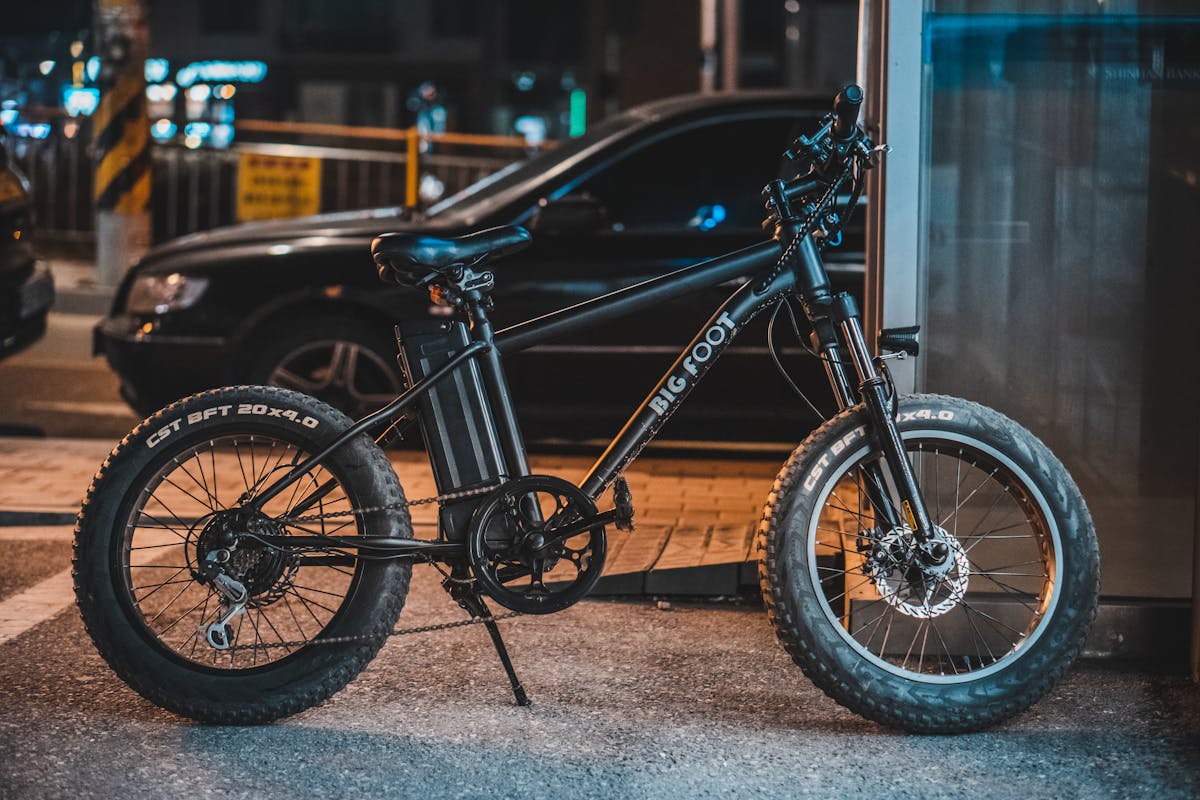
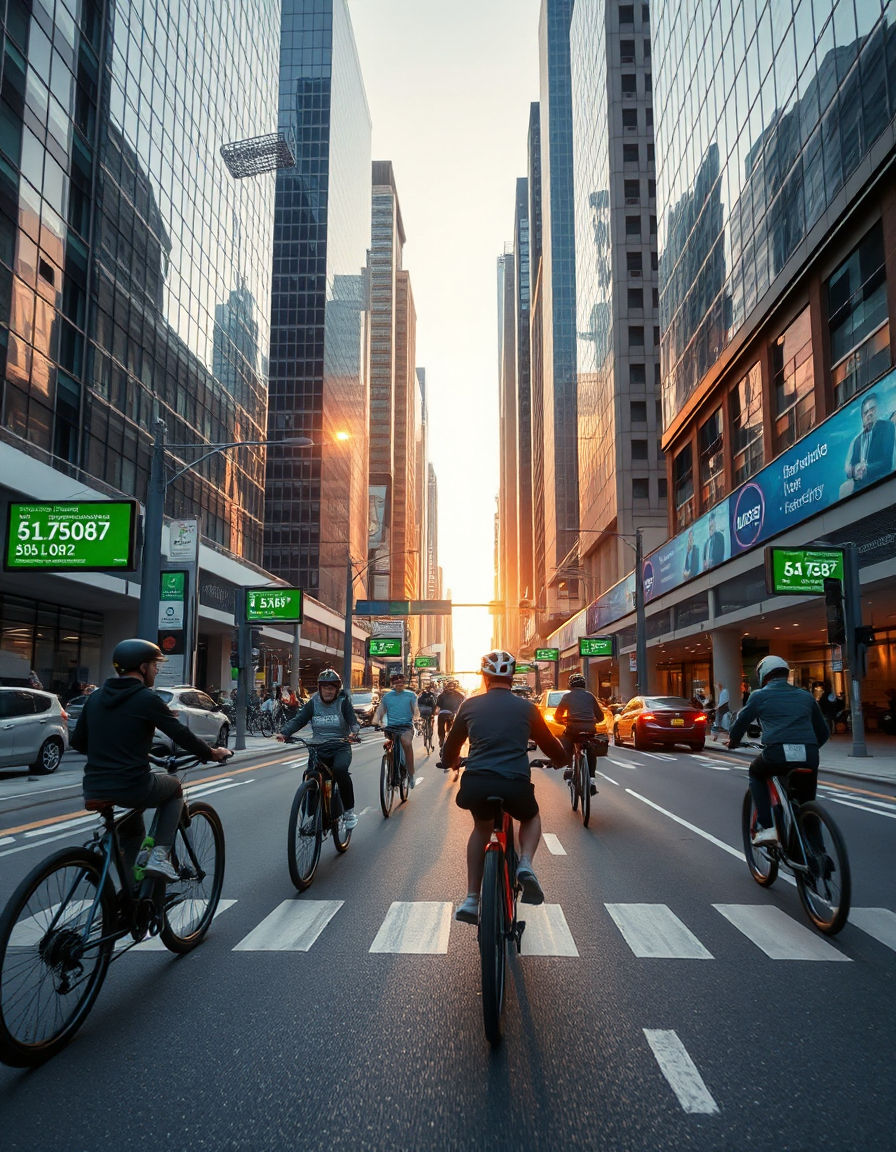
📸 Photo by Bharat Tamang on Pexels – illustrating urban e-bike riding and sidewalk safety.
What Riders Must Avoid: Practical Safety Rules
Even where Sidewalk Riding Laws allow limited sidewalk use, legality should never be confused with safety. The minimum legal standard is not always the safest behavioral standard. Responsible riders understand that sidewalks and shared pathways require a defensive, pedestrian-first mindset at all times.
Below are practical safety principles that apply regardless of how permissive local Sidewalk Riding Laws may be:
1. Avoid High Speed on Sidewalks
If riding on a sidewalk is legally permitted, reduce speed to near walking pace — ideally under 8–10 km/h. Matching pedestrian flow dramatically reduces kinetic energy and shortens braking distance. Remember: what feels “slow” on an e-bike can still feel fast to someone on foot.
2. Never Overtake at Blind Corners
Sidewalks often include hidden driveways, building exits, hedges, parked cars, and bus shelters that block visibility. Overtaking near these blind spots eliminates reaction time. Many incidents associated with violations of Sidewalk Riding Laws occur not because of reckless speed, but because of unseen cross-traffic.
3. Avoid Using Throttle Near Dense Foot Traffic
Throttle input creates immediate torque. Sudden acceleration — even over a short distance — can surprise pedestrians and reduce your ability to adjust trajectory. In crowded areas, rely on controlled pedal assist or dismount if necessary.
4. Do Not Assume Pedestrians Hear You
Modern sidewalks are filled with distractions: headphones, phone conversations, ambient city noise. Electric bikes are significantly quieter than traditional motor vehicles. Use a bell early and at a respectful distance. Late warnings often cause panic reactions rather than safe adjustments.
5. Maintain Predictable Line and Body Language
Unstable weaving creates uncertainty. Ride in a straight, predictable path and signal your intentions clearly. Predictability reduces conflict more effectively than speed reduction alone.
6. In National Parks – Stay on Approved Routes Only
Do not assume that because urban Sidewalk Riding Laws allow flexibility, similar flexibility exists on protected land. Always review official trail maps before riding. Riding outside approved routes can cause environmental damage and lead to fines or access restrictions.
Ultimately, respecting Sidewalk Riding Laws is about more than avoiding citations. It is about reducing friction between mobility modes and ensuring that pedestrians, riders, and nature can coexist without unnecessary risk.
When Is It Actually Safer to Use the Road?
At first glance, many riders assume that sidewalks feel safer simply because they are separated from motor vehicles. However, in cities with proper cycling infrastructure, the opposite is often true. In well-designed urban corridors, riding in designated bike lanes can be statistically safer than riding on sidewalks — even when Sidewalk Riding Laws technically allow limited sidewalk use.
The reason is predictability. Roads and bike lanes operate within structured traffic systems. Drivers expect movement in specific directions. Sightlines are longer. Intersections are engineered with traffic flow in mind. When riders position themselves within designated lanes, they become part of an organized mobility stream rather than an unexpected obstacle.
On sidewalks, movement patterns are far less predictable. Pedestrians stop suddenly, change direction, exit buildings without scanning for fast-moving vehicles, and walk side-by-side in groups. Even if Sidewalk Riding Laws permit riding in certain areas, the sidewalk environment itself remains dynamic and irregular.
Bike lanes, by contrast, are designed for forward motion. They provide:
- Clear directional flow
- Greater visibility at intersections
- More consistent surface conditions
- Higher awareness from surrounding traffic
Urban planners often shape Sidewalk Riding Laws specifically to encourage riders into these structured lanes. The goal is not to penalize micromobility users but to prevent chaotic mixing between walking-speed and vehicle-speed traffic. When each mode operates within its intended corridor, overall safety improves.
Of course, this assumes the presence of adequate bike infrastructure. In areas without protected lanes or safe shoulders, riders may feel forced onto sidewalks for self-preservation. This infrastructure gap is part of the broader transportation debate. But where quality bike lanes exist, they typically provide a safer and more predictable alternative than sidewalk riding.
The key insight: safety is not just about separation from cars — it is about visibility, expectation, and structured flow. In many modern cities, following the intent behind Sidewalk Riding Laws by choosing the road or bike lane can reduce risk rather than increase it.
Legal Liability: What Happens After a Sidewalk Collision?
Sidewalk Riding Laws are not just guidelines—they form the basis for legal responsibility in the event of a collision with a pedestrian. Violating these laws significantly increases liability exposure, often beyond what insurance policies will cover. In many jurisdictions, riding on sidewalks where it is prohibited automatically creates a presumption of negligence, shifting the burden of proof onto the rider.
Even in areas where sidewalk riding is technically permitted, courts and insurance adjusters closely examine the rider’s behavior. Factors influencing liability often include:
- Speed at impact: Riding faster than what is considered safe for pedestrian proximity can escalate civil or criminal responsibility.
- Warning behavior: Failure to ring a bell, alert pedestrians vocally, or take precautionary measures may be cited as negligence.
- Local signage compliance: Ignoring posted “no e-bike” or “no riding” signs can transform a minor incident into a significant legal violation.
- Pedestrian vulnerability: Injuries involving children, elderly individuals, or persons with disabilities are treated with higher scrutiny, increasing potential damages.
Riders who fail to understand the legal nuances embedded in Sidewalk Riding Laws may face serious consequences ranging from fines to civil lawsuits. Beyond the immediate financial risk, collisions also undermine public confidence in micromobility and can trigger stricter enforcement or expanded prohibitions in urban areas.
Ultimately, knowledge of local Sidewalk Riding Laws is a form of risk management. Responsible riders prioritize both compliance and awareness, reducing not only legal exposure but also the likelihood of harm to pedestrians.
Suggested topics:
10 Mistakes to Avoid When Buying electric bikes
AI and Smart Sensors
Smart Urban Riding Etiquette
Routes for Electric Bike Riding
🎥 Watch: A clear explainer on why many cities ban e-bikes from sidewalks, how this ties into sidewalk riding laws, and what safer alternatives exist — crucial viewing for riders who want to respect pedestrians and stay compliant.
Final Verdict: Respect Sidewalk Riding Laws or Risk More Than a Fine
Sidewalk Riding Laws are often misunderstood as restrictions on micromobility, but they are fundamentally safety frameworks. These regulations exist to balance efficient urban transit with pedestrian dignity, ensuring that sidewalks remain predictable, safe, and accessible for all users.
In urban settings, these laws protect vulnerable pedestrians — children, elderly walkers, parents with strollers, and individuals with disabilities — from the unpredictable speed and torque of electric bikes and scooters. In national parks, rules serve a complementary purpose: protecting delicate ecosystems, preventing trail erosion, and minimizing wildlife disruption. In both cases, adherence to Sidewalk Riding Laws is a form of responsible citizenship, not merely a legal obligation.
Understanding and following Sidewalk Riding Laws is essential for the long-term sustainability of micromobility. Riders who ignore these laws risk not only fines or legal liability but also eroding public trust in electric transportation. Negative incidents can provoke stricter regulations, reduced access to trails and bike lanes, and increased pedestrian friction.
Ultimately, legality is the baseline — the minimum requirement to avoid penalties. True rider responsibility extends beyond compliance. Courtesy, situational awareness, and proactive risk management enhance safety for everyone and demonstrate that electric mobility can coexist harmoniously with pedestrian infrastructure.
For more in-depth safety guides, e-bike insights, and urban mobility strategies, visit RideWattly — your resource for advanced and responsible micromobility practices.
❓ Frequently Asked Questions (FAQ) about E-Bikes, Sidewalk Riding Laws, and National Parks
What are Sidewalk Riding Laws?
Is it legal to ride an e-bike on sidewalks?
Are e-bikes allowed in national parks?
Why are sidewalks considered dangerous for e-bike riders?
What are the psychological effects of riding on sidewalks?
What are the environmental risks of e-bikes in national parks?
How can riders reduce legal liability on sidewalks?
Is it safer to ride in bike lanes than on sidewalks?
What should riders avoid to ensure pedestrian safety?
Why is respecting Sidewalk Riding Laws important?









Alright, jumped into he777. Seems like a good option to spend time on. If you’re feeling lucky, why not give it a go? Maybe you’ll strike it rich, who knows! Give it a try here: he777