Used Electric Bikes vs New Electric Bikes: Which One Is the Smarter Investment in 2026?
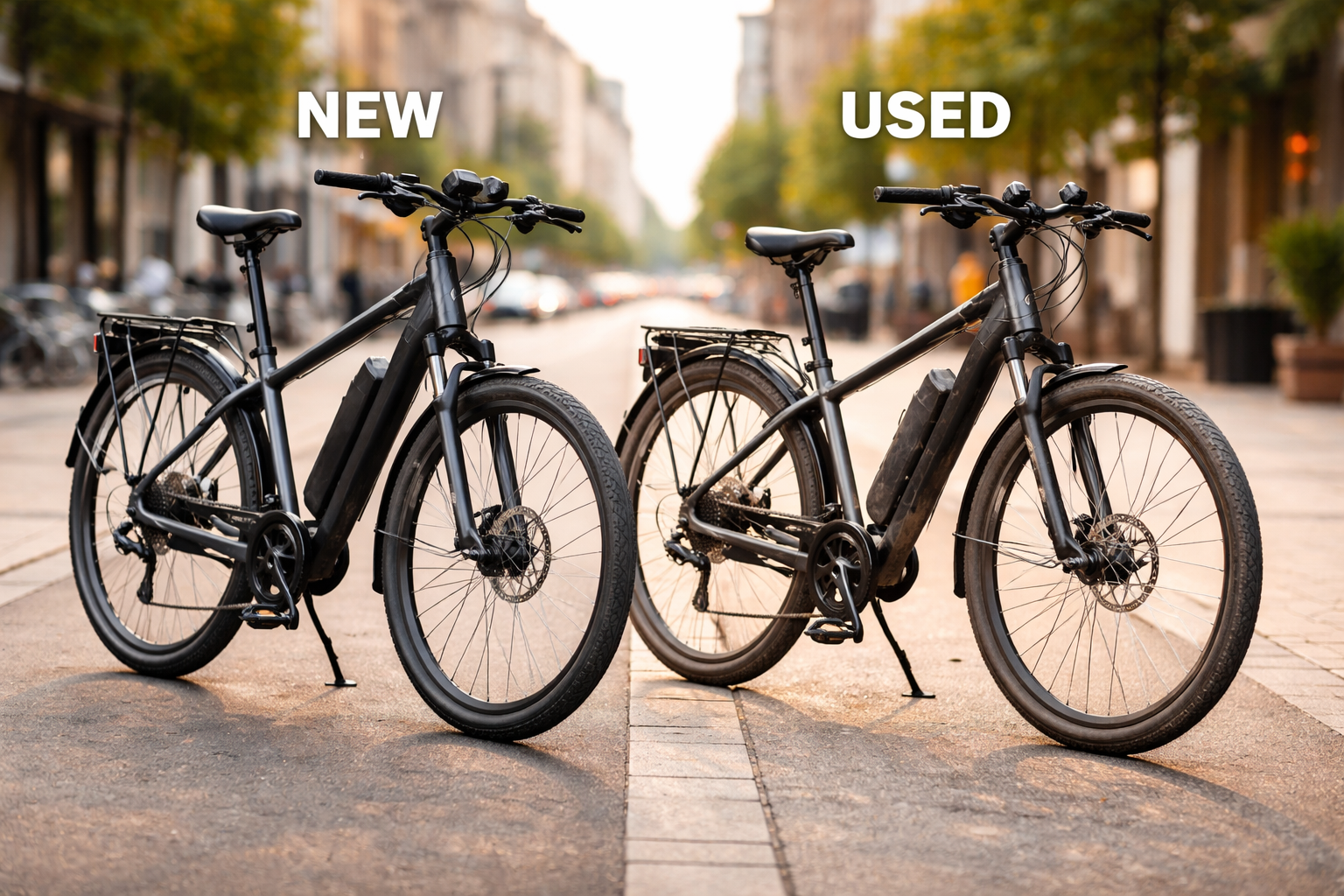
Used Electric Bikes vs New Electric Bikes: The Ultimate Guide for Smart Riders
Focus Keyword: Used Electric Bikes vs New Electric Bikes
When comparing Second-Hand E-Bikes vs Brand-New E-Bikes, the decision goes far beyond the price tag. At first glance, the difference may seem simple — one costs less upfront, the other offers that brand-new feel. But the real comparison between E-Bikes: Used vs Brand-New involves battery longevity, warranty protection, hidden wear, software updates, long-term maintenance costs, safety standards, and resale value over time.
For readers of RideWattly, understanding the full picture of Used Electric Bikes vs New Electric Bikes can mean the difference between making a strategic investment and facing unexpected expenses. A used e-bike may look like a bargain today, but if the battery has degraded 25% or the motor warranty has expired, the long-term ownership cost can quickly rise. On the other hand, new electric bikes demand a higher initial investment but often provide predictable performance, manufacturer support, and peace of mind during the first critical years of ownership.
The debate around E-Bikes: Used vs Brand-New also depends on rider profile. Are you a daily commuter replacing car trips? A weekend leisure rider? A budget-conscious beginner exploring the e-bike lifestyle? Or a performance-focused rider looking for the latest torque sensor technology? Each category shifts the balance between Used Electric Bikes vs New Electric Bikes in different ways.
Another overlooked factor in Used Electric Bikes vs New Electric Bikes is technological evolution. Motor efficiency, controller firmware, battery energy density, and integrated safety systems improve almost every year. Buying new often means access to the latest refinements, while buying used may mean inheriting older-generation components. That doesn’t automatically make used electric bikes a bad choice — but it changes the value equation.
This guide takes a deep, practical look at Used Electric Bikes vs New Electric Bikes — analyzing real-world costs, mechanical risks, depreciation curves, reliability expectations, and smart inspection strategies. Whether you’re looking to minimize upfront spending or maximize long-term reliability, understanding Used Electric Bikes vs New Electric Bikes will help you choose the option that aligns with your budget, riding style, and performance expectations.
Making the right decision between used electric bikes and new electric bikes requires careful evaluation, technical understanding, and access to the right tools.
These resources help you analyze performance, battery health, cost-effectiveness, and riding efficiency while ensuring a safe and smart investment.
- Advanced Digital Speedometer — track speed accurately to assess the performance of new vs used e-bikes.
- Advanced E-Bike Simulator — simulate rides to understand how different e-bike models perform on varied terrains.
- Compare E-Bikes & Scooters — compare specifications of used and new electric bikes to make informed purchasing decisions.
- E-Bike Cost of Ownership — evaluate total expenses including battery replacement and maintenance for used vs new models.
- Battery Lifespan Calculator — estimate remaining battery life on used electric bikes to avoid unexpected replacement costs.
- Battery Replacement Cost Predictor — anticipate costs of battery replacement and factor into buying decisions.
- Maintenance Planner — schedule regular maintenance and track component wear for long-term reliability.
Read More!
Why E-Bikes: Used vs Brand-New Is a Debate Every Smart Buyer Faces
When discussing Used Electric Bikes vs New Electric Bikes, one of the strongest arguments in favor of used models is simple: price leverage. In the real-world comparison of Used Electric Bikes vs New Electric Bikes, depreciation plays a major role. A quality e-bike that originally cost $2,000–$3,000 can often be purchased for 30–50% less after just one or two years — even if it has relatively low mileage.
This is why the Used Electric Bikes vs New Electric Bikes conversation often starts with value optimization. Many riders realize they can access better components, stronger motors, or premium frame designs by choosing used instead of entry-level new models at the same budget.
Financial Advantages in the Used Electric Bikes vs New Electric Bikes Comparison
- Lower upfront investment – In the Used Electric Bikes vs New Electric Bikes equation, used models dramatically reduce initial spending, making e-mobility accessible to more riders.
- Access to premium-tier brands – Comparing Used Electric Bikes vs New Electric Bikes often reveals that a mid-range new bike costs the same as a high-end used model.
- Depreciation advantage – In the Used E-Bikes Compared to New Models debate, the first owner absorbs the steepest value drop, protecting your resale value later.
- Sustainability factor – From an environmental perspective, Second-Hand E-Bikes vs Brand-New E-Bikes favors used purchases by extending product lifecycle and reducing manufacturing demand.
For example, premium manufacturers like Specialized and Trek engineer durable aluminum and carbon frames paired with reliable mid-drive systems. In the Used Electric Bikes vs New Electric Bikes comparison, purchasing a used model from one of these brands may deliver superior frame quality and motor performance compared to buying a lower-tier new bike at the same price point.
However, the Used Electric Bikes vs New Electric Bikes decision should never rely on price alone. While used bikes offer strong financial appeal, buyers must also weigh battery health, service history, firmware updates, and potential hidden wear. The temptation is real — but the smartest riders evaluate Used Electric Bikes vs New Electric Bikes strategically, balancing cost savings with long-term reliability.
Used Electric Bikes vs New Electric Bikes: The Hidden Risks Buyers Must Understand
In the debate of Used E-Bikes Compared to New Models, price advantages often dominate the conversation. However, the real difference between Used Electric Bikes vs New Electric Bikes becomes clear when examining hidden mechanical and financial risks — especially for first-time buyers who may underestimate long-term ownership costs.
While used models can offer strong upfront savings, the Second-Hand E-Bikes vs Brand-New E-Bikes comparison shifts dramatically once battery condition, warranty coverage, and unknown wear history are factored into the equation.
Battery Degradation: The Core Factor in Used Electric Bikes vs New Electric Bikes
The battery is the single most expensive component of any e-bike. In the Used Electric Bikes vs New Electric Bikes discussion, battery health often determines whether a deal is truly a bargain or a financial mistake. Lithium-ion batteries typically last between 500–1,000 full charge cycles depending on riding habits, storage conditions, and charging behavior. According to U.S. Department of Energy resources, lithium-ion batteries gradually lose capacity over time — even if they are not heavily used.
In practical terms, this means that when evaluating Used E-Bikes Compared to New Models, buyers must carefully inspect:
- Total mileage ridden
- Estimated charge cycle count
- Real-world range compared to original factory specifications
- Current battery voltage under load
- Full replacement cost of a compatible battery pack
A discounted bike in the Used Electric Bikes vs New Electric Bikes comparison can quickly lose its financial advantage if a $600–$900 battery replacement becomes necessary within the first year.
No Warranty or Limited Coverage
Another major factor in the Used Electric Bikes vs New Electric Bikes decision is warranty protection. Most new electric bikes include 1–2 years of manufacturer coverage for the motor, battery, and electronics. In contrast, when choosing used electric bikes, warranty coverage is often expired or non-transferable.
In the Second-Hand E-Bikes vs Brand-New E-Bikes comparison, this means that motor controller failures, display malfunctions, sensor errors, or internal wiring issues become the buyer’s financial responsibility. Even minor electrical diagnostics can be costly without coverage.
Unknown Usage History and Component Wear
The final hidden variable in Used Electric Bikes vs New Electric Bikes is usage history. Was the bike used for daily commuting in wet weather? Off-road trail riding? Food delivery under heavy load? High torque usage and frequent acceleration put additional stress on motors, drivetrains, and brake systems.
Without detailed maintenance records, the Used E-Bikes Compared to New Models comparison becomes partially a trust-based decision. Chains, cassettes, brake rotors, suspension forks, and wheel hubs may appear visually fine but could be nearing the end of their service life.
Ultimately, the Used Electric Bikes vs New Electric Bikes choice is not simply about saving money upfront. It’s about evaluating mechanical risk, battery health, and long-term reliability. Smart buyers analyze these hidden risks carefully before committing to a second-hand e-bike.
Used Electric Bikes vs New Electric Bikes: The Clear Advantages of Buying New
In the full comparison of Second-Hand E-Bikes vs Brand-New E-Bikes, buying new consistently stands out for one primary reason: predictability. While used models may offer upfront savings, the Used Electric Bikes vs New Electric Bikes debate often shifts when buyers prioritize reliability, warranty security, and long-term performance consistency.
New electric bikes provide structured protection and technological advantages that reduce uncertainty — something especially valuable for daily commuters or riders replacing car transportation. In the Used Electric Bikes vs New Electric Bikes discussion, this peace of mind can justify the higher initial investment.
- Full warranty coverage – In the Used E-Bikes Compared to New Models comparison, warranty protection is one of the biggest differentiators. Most manufacturers offer 1–2 years of coverage on motors, batteries, and electronics, significantly reducing financial risk.
- Latest motor and battery technology – The Used Electric Bikes vs New Electric Bikes gap becomes evident when comparing torque sensors, controller firmware, battery energy density, and charging efficiency. New models often deliver smoother power delivery and improved range.
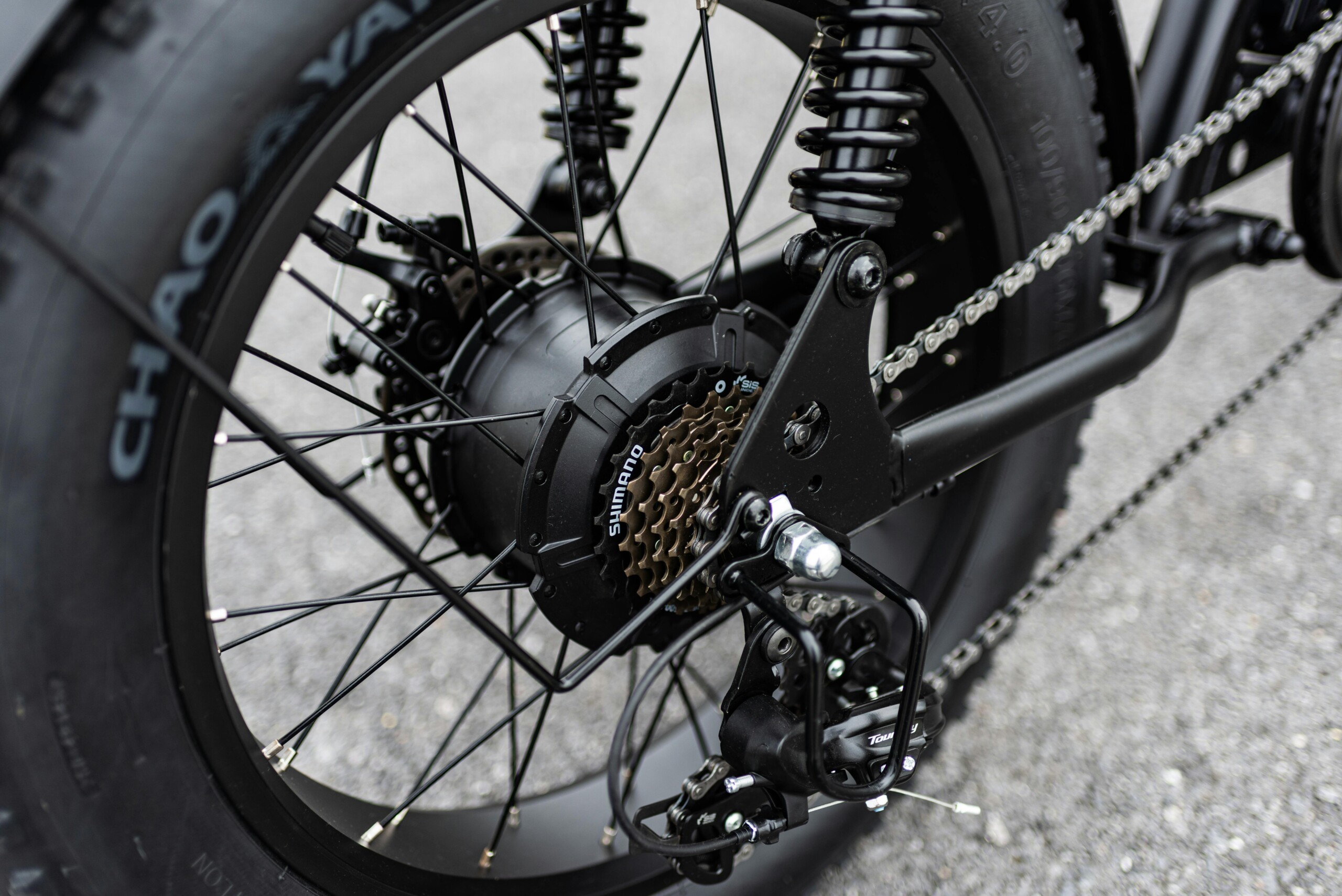
- Zero drivetrain or suspension wear – Unlike used bikes, new electric bikes start with fresh chains, cassettes, brake pads, bearings, and suspension components — eliminating hidden maintenance costs in the first ownership phase.
- Professional dealer setup and diagnostics – In the Second-Hand E-Bikes vs Brand-New E-Bikes equation, dealer calibration ensures the motor system, display settings, and firmware are optimized from day one.
Brands like Rad Power Bikes and Gazelle continue refining torque sensing systems, integrated smart displays, thermal battery management, and frame geometry each year. In the Used Electric Bikes vs New Electric Bikes comparison, these incremental improvements matter — especially for riders who depend on consistent performance across long distances.
Another overlooked factor in Used Electric Bikes vs New Electric Bikes is firmware and software evolution. Many new models support system diagnostics, ride analytics, and safety refinements that older bikes may not receive. Over time, these improvements enhance efficiency and user experience.
Ultimately, when evaluating Used Electric Bikes vs New Electric Bikes, purchasing new is less about excitement and more about stability. Riders seeking maximum reliability, manufacturer accountability, and the latest safety standards often find that new electric bikes provide the strongest long-term ownership experience.
Used Electric Bikes vs New Electric Bikes: Who Should Consider Buying Used?
In the ongoing comparison of Used E-Bikes Compared to New Models, buying used is not automatically the “budget compromise” many assume. In fact, within the Used Electric Bikes vs New Electric Bikes debate, second-hand models can be a strategic choice for specific types of riders who understand the trade-offs and know how to evaluate condition and risk properly.
Choosing used makes the most sense when the buyer prioritizes upfront savings and is comfortable accepting a degree of mechanical uncertainty. In the Used Electric Bikes vs New Electric Bikes equation, this group of riders sees opportunity where others see risk.
Used electric bikes are especially suitable for:
- First-time riders testing the e-bike lifestyle – In the Second-Hand E-Bikes vs Brand-New E-Bikes comparison, beginners may prefer a lower investment while exploring whether electric commuting truly fits their routine.
- Budget-conscious commuters – Riders replacing short car trips but working within strict financial limits often lean toward the used side of the Used Electric Bikes vs New Electric Bikes decision.
- DIY enthusiasts and mechanically confident buyers – Those comfortable inspecting drivetrain wear, brake systems, hub bearings, and battery health can reduce risk significantly when choosing used.
- Frequent upgraders – Riders who switch bikes every 1–2 years may benefit from the depreciation advantage built into the Used E-Bikes Compared to New Models comparison.
In the broader Used Electric Bikes vs New Electric Bikes discussion, mechanical awareness is the key variable. If you can properly assess brake pad thickness, chain stretch, motor noise under load, battery voltage sag, and overall frame integrity, buying used electric bikes can become a calculated financial move rather than a gamble.
However, if inspection skills are limited, the Used Electric Bikes vs New Electric Bikes balance may tilt toward new models for safety and reliability reasons. The smartest buyers don’t just look at price — they evaluate their own technical confidence before choosing sides in the Second-Hand E-Bikes vs Brand-New E-Bikes decision.
Used Electric Bikes vs New Electric Bikes: Who Should Buy New Instead?
In the strategic comparison of Used Electric Bikes vs New Electric Bikes, buying new becomes the logical choice for riders who prioritize reliability, daily performance stability, and reduced mechanical risk. While used options may offer financial savings, the Used Electric Bikes vs New Electric Bikes balance shifts significantly when transportation dependability becomes essential rather than optional.
New electric bikes are particularly recommended for:
- Daily long-distance commuters – In the Used Electric Bikes vs New Electric Bikes decision, riders covering significant mileage every week benefit from predictable battery capacity and consistent motor performance.
- Riders who depend on maximum battery reliability – The Used Electric Bikes vs New Electric Bikes comparison often centers around battery health. A brand-new battery eliminates uncertainty about charge cycles, degradation rate, and sudden range drops.
- People unfamiliar with e-bike mechanics – Without the ability to inspect controller diagnostics, drivetrain wear, or electrical connections, the Used E-Bikes Compared to New Models equation favors new purchases for peace of mind.
- Buyers seeking warranty protection – Manufacturer coverage remains one of the strongest advantages in the Used Electric Bikes vs New Electric Bikes debate, especially for expensive components like motors and battery packs.
If the e-bike is intended to replace a car commute, the Used Electric Bikes vs New Electric Bikes choice should prioritize reliability over short-term savings. Unexpected downtime, battery replacement costs, or electrical repairs can quickly offset any upfront discount achieved by buying used.
Ultimately, in the Used E-Bikes Compared to New Models comparison, new electric bikes are best suited for riders who treat their e-bike as a primary transportation tool rather than a secondary convenience. Stability, warranty security, and modern technology integration often outweigh the initial price difference.
E-Bikes: Used vs Brand-New: Essential Checklist Before Buying Used
When analyzing Used Electric Bikes vs New Electric Bikes, the used option can offer impressive value — but only if inspected properly. In the Used E-Bikes Compared to New Models comparison, due diligence is what separates a smart investment from an expensive mistake. Unlike new electric bikes that come factory-fresh and warranty-protected, used models require careful technical evaluation.
Before committing to a second-hand purchase in the Used Electric Bikes vs New Electric Bikes decision process, follow this essential inspection checklist:
- Inspect the frame thoroughly – Look for cracks, paint fractures near weld points, corrosion, or structural misalignment. In the E-Bikes: Used vs Brand-New debate, frame integrity is non-negotiable because repairs are often impractical or unsafe.
- Test ride under all assist levels – Evaluate responsiveness, power delivery smoothness, and sensor accuracy. Comparing Used Electric Bikes vs New Electric Bikes reveals that older cadence sensors may feel less refined than modern torque-based systems.
- Check battery voltage and real-world range – Measure voltage under load if possible. Ask about charging habits and observe how quickly the battery drains during the test ride. Battery condition is the most critical variable in Used Electric Bikes vs New Electric Bikes.
- Listen for unusual motor noise – Grinding, clicking, or inconsistent humming under acceleration can indicate internal wear. In the Used E-Bikes Compared to New Models comparison, motor replacement costs significantly affect total ownership value.
- Verify charger authenticity and compatibility – Ensure the original charger is included and functioning correctly. Third-party chargers may affect long-term battery health.
- Request proof of original purchase and service history – Documentation reduces the uncertainty gap that naturally exists in the Used Electric Bikes vs New Electric Bikes evaluation.
Finally, always compare the asking price against current market listings for new models. In some cases, seasonal promotions or manufacturer discounts narrow the price gap in the Used Electric Bikes vs New Electric Bikes comparison, making a new purchase unexpectedly competitive.
The smartest approach to Used Electric Bikes vs New Electric Bikes is not emotional — it’s analytical. A thorough inspection transforms the used option from a gamble into a calculated financial decision.
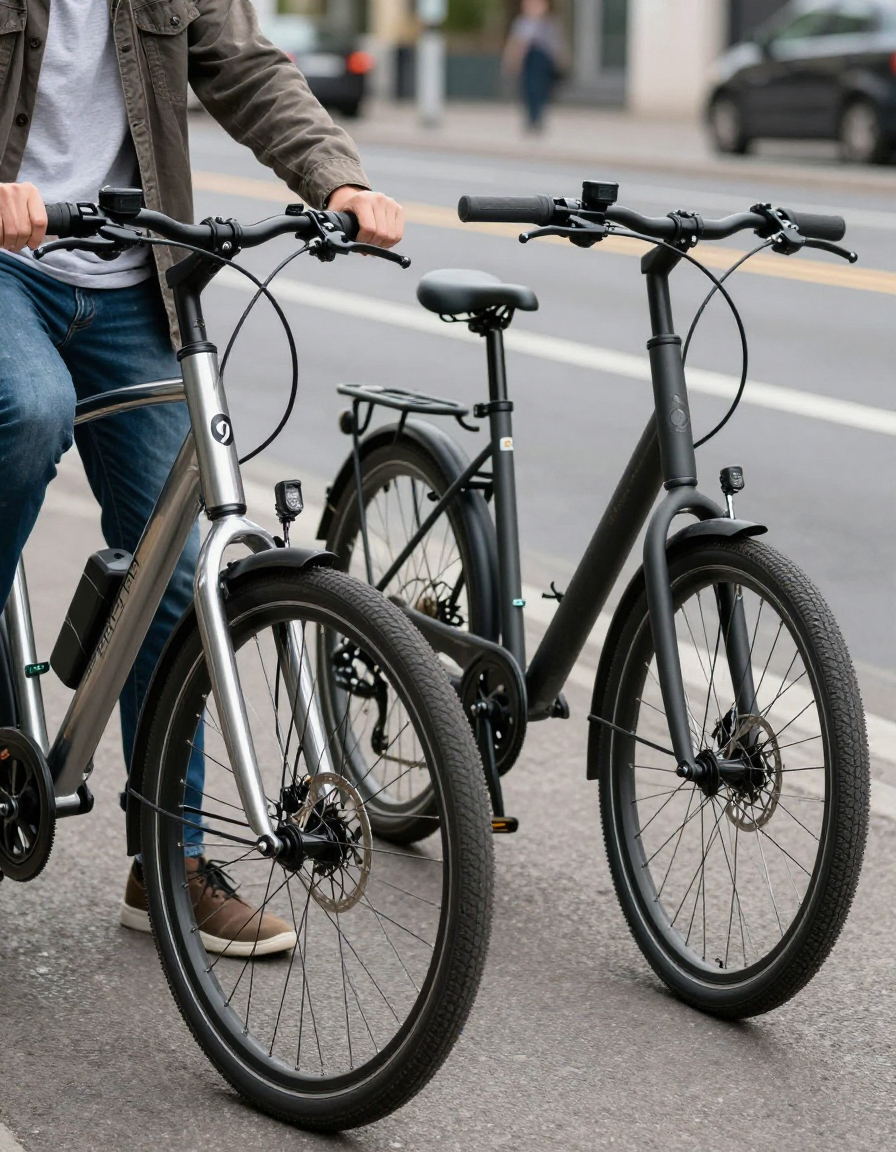
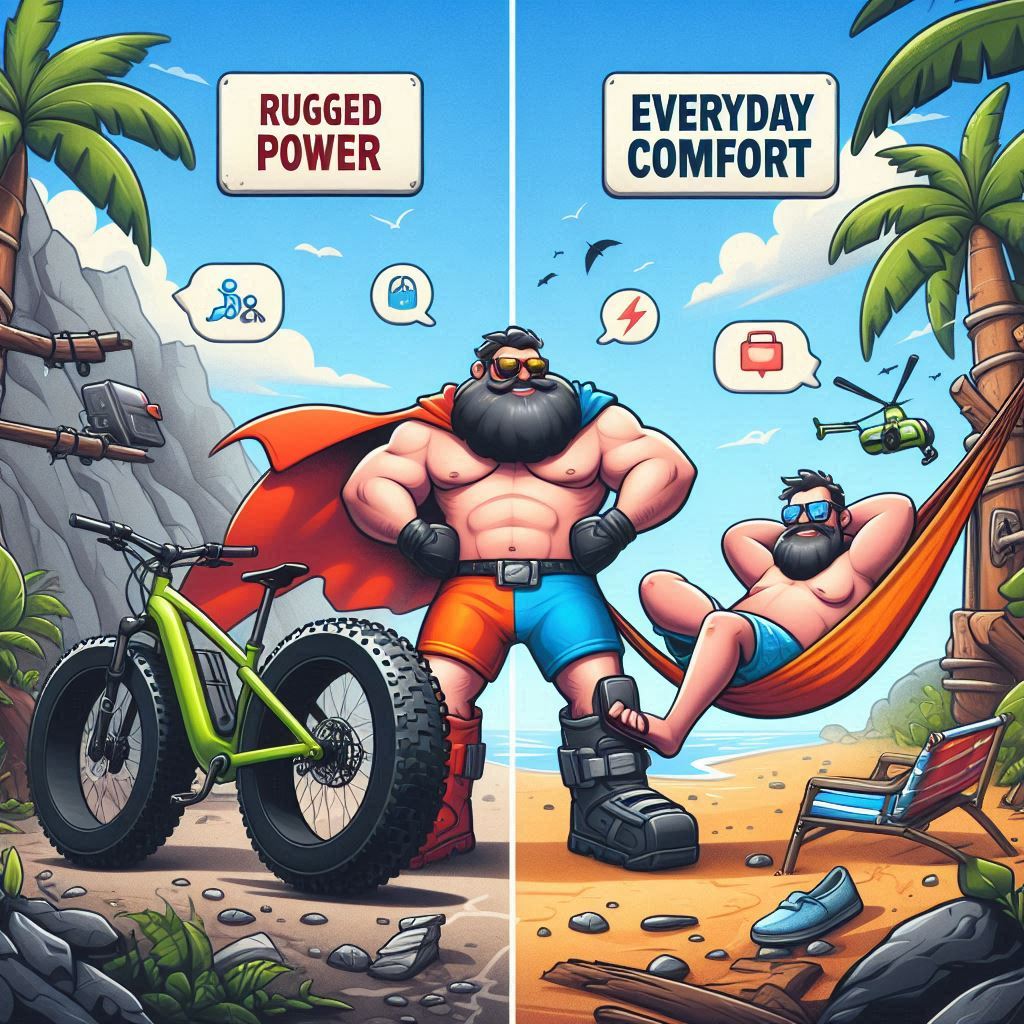
🎨 Comparison of a brand-new electric bike versus a used one. This image visually highlights the differences between new and second-hand e-bikes for readers considering their purchase.
Used E-Bikes Compared to New Models: Long-Term Cost Comparison
When evaluating E-Bikes: Used vs Brand-New, the real difference is rarely the sticker price — it’s the total cost of ownership over time. Many buyers focus on the immediate savings of buying used, but the Used Electric Bikes vs New Electric Bikes comparison becomes far more revealing when you calculate maintenance, replacement parts, and risk exposure over a 2–4 year period.
Buying used electric bikes may reduce upfront spending significantly, but in the Used Electric Bikes vs New Electric Bikes equation, you must factor in potential hidden costs such as:
- Battery replacement ($400–$900) – In the Used Electric Bikes vs New Electric Bikes comparison, battery health is the single largest financial variable. A degraded battery can erase initial savings quickly.
- Drivetrain wear – Chains, cassettes, chainrings, brake pads, and rotors wear faster on e-bikes due to added torque. When comparing Used E-Bikes Compared to New Models, replacing these components within the first year is common for heavily used second-hand models.
- No warranty protection – The Used Electric Bikes vs New Electric Bikes decision becomes risk-sensitive when motor controllers, displays, or internal wiring fail outside of warranty coverage.
- Unexpected electronic diagnostics – Troubleshooting electrical issues without manufacturer support can add labor costs that new-bike buyers often avoid during the first years.
Meanwhile, in the Pre-Owned Electric Bikes vs New Electric Bikes comparison, new electric bikes demand a higher initial investment but typically offer predictable ownership costs during the first 1–2 years. Warranty coverage reduces financial uncertainty, fresh components delay maintenance expenses, and modern battery systems provide full-rated range capacity from day one.
Another factor in E-Bikes: Used vs Brand-New is resale trajectory. A well-maintained new bike purchased today may retain strong resale value after two years, narrowing the real cost gap compared to buying used initially.
Ultimately, the smartest way to analyze Used Electric Bikes vs New Electric Bikes is to calculate total ownership cost, not just purchase price. When maintenance, battery lifecycle, warranty protection, and depreciation are considered together, the financial gap between used and new often becomes smaller — and more strategic — than it first appears.
Suggested topics:
10 Mistakes to Avoid When Buying electric bikes
Complete U.S. E-Bike Laws Guide
E-Bikes and Batteries Recycling
AI and Smart Sensors
Smart Urban Riding Etiquette
🎥 Watch: Should you buy used or new electric bikes? This video compares pros and cons of each option so you can decide which fits your riding needs and budget in the Used Electric Bikes vs New Electric Bikes debate. :contentReference[oaicite:0]{index=0}
Pre-Owned Electric Bikes vs New Electric Bikes: Final Verdict for Smart Buyers
When weighing Used Electric Bikes vs New Electric Bikes, the ultimate choice comes down to a balance of risk tolerance, mechanical knowledge, budget constraints, and intended use. The Used Electric Bikes vs New Electric Bikes comparison is not simply a matter of upfront cost — it’s a strategic evaluation of performance, longevity, and ownership satisfaction.
If your primary goal is minimizing initial expense and you are confident inspecting drivetrain condition, battery health, and electrical systems, buying used electric bikes can deliver excellent value in the Used Electric Bikes vs New Electric Bikes debate. You gain access to higher-tier components at a fraction of the new price, while accepting a calculated level of risk.
On the other hand, if reliability, warranty protection, and predictable long-term battery performance are your top priorities, new electric bikes clearly outweigh used models in the Used Electric Bikes vs New Electric Bikes analysis. The cost premium for new models buys peace of mind, updated technology, and reduced maintenance uncertainty — factors that matter most for daily commuters and long-distance riders.
At RideWattly, our recommendation is to evaluate total cost of ownership when comparing Pre-Owned Electric Bikes vs New Electric Bikes, rather than focusing solely on the purchase price. Smart riders in the Second-Hand E-Bikes vs Brand-New E-Bikes conversation understand that true savings come from optimizing performance, ensuring safety, and maximizing long-term satisfaction — not just chasing the lowest initial cost.
In conclusion, whether you lean toward a used bargain or a new, fully warranted model, fully understanding the trade-offs in the E-Bikes: Used vs Brand-New comparison ensures your choice aligns with your budget, lifestyle, and riding goals.
❓ Frequently Asked Questions (FAQ) about Used Electric Bikes vs New Electric Bikes
What are the main differences between used electric bikes and new electric bikes?
How can I tell if a used e-bike battery is still healthy?
Is buying a used e-bike worth the savings?
Who should consider buying a new electric bike?
Do new electric bikes retain value better than used ones?
How often do used e-bike components need replacement?
Can used e-bikes come with a warranty?
Are used e-bikes environmentally friendly?
How do I choose between used and new e-bikes for urban commuting?
What should I check during a test ride of a used e-bike?