Electric Bike & Scooter Battery Safety Guide: 8 Essential Precautions Every Rider Must Follow
Battery Safety Guide: Top Tips for Electric Bike and Scooter Owners
Electric bikes and electric scooters have transformed urban mobility, offering a fast, eco‑friendly, and enjoyable way to commute or explore. However, at the heart of every electric vehicle lies a high‑energy lithium‑ion battery, which requires careful handling. Improper use, charging, or storage can lead to dangerous situations such as overheating, thermal runaway, fires, or chemical leaks. This is why a well‑structured Battery Safety Guide is essential for every rider who values both personal safety and vehicle longevity.
In this Battery Safety Guide, we dive deep into practical precautions, highlighting what riders must do, what to avoid, and the best maintenance practices. From selecting the right charger and monitoring charging environments to safe storage tips and emergency preparedness, understanding these rules can prevent accidents and extend the life of your battery. Following a clear Battery Safety Guide ensures that your electric bike or scooter remains reliable, efficient, and safe every time you ride.
Whether you are a seasoned e-bike commuter or a first-time electric scooter rider, adhering to the principles outlined in this Battery Safety Guide will protect you, your surroundings, and your investment. By making battery safety a priority, you reduce risks, optimize performance, and enjoy a worry-free electric ride.
Staying safe while riding an e-bike, scooter, or bicycle requires awareness, preparation, and the right tools.
These resources help you monitor, analyze, and optimize your riding experience while prioritizing battery safety, road safety, and protective gear usage.
- Battery Calculator — calculate battery capacity, voltage, and range for safer rides.
- Battery Cell Analyzer — inspect individual battery cells to prevent overheating or failures.
- Battery Pack Builder — safely design or upgrade your battery pack following safety guidelines.
- Battery Pack Thermal Calculator — check battery temperature ranges and avoid thermal hazards.
- Battery Parallel/Series Safety Checker — ensure correct connections and reduce fire risk.
- E-Scooter Battery Checker — monitor battery health and identify signs of degradation early.
- Battery Replacement Cost Predictor — plan for battery replacement and avoid last-minute surprises.
Read More!
Why Electric Bike & Scooter Battery Safety Matters
Modern electric bikes and scooters rely on high-capacity lithium‑ion (Li‑ion) batteries that are both lightweight and powerful, enabling longer rides and faster acceleration. While these batteries make electric mobility convenient, they also carry inherent risks if not handled correctly. Improper charging, storage, or accidental damage can trigger a phenomenon called thermal runaway — a rapid and uncontrollable rise in temperature that can lead to fires, explosions, or chemical leakage.
This is precisely why every rider should consult a detailed Battery Safety Guide. Understanding the principles outlined in a Battery Safety Guide helps prevent accidents, protects property, and safeguards riders from injury. Fire safety studies show that lithium‑ion batteries are one of the leading causes of electric vehicle fires when misused. For reference, the National Fire Protection Association reports that electrical equipment failures remain among the top sources of residential and vehicle fires, emphasizing the importance of following a trusted Battery Safety Guide.
Beyond preventing immediate hazards, a solid Battery Safety Guide also provides guidance for long-term battery care, ensuring that your electric bike or scooter operates efficiently, maintains optimal range, and extends battery lifespan. By making battery safety a core part of your riding routine, you not only protect yourself but also maximize the performance and reliability of your electric vehicle.
1. Battery Charging Safety: Habits That Prevent Hazards
Charging your electric bike or scooter battery is one of the most critical moments for safety. Lithium-ion batteries store a large amount of energy in a compact form, which can be dangerous if mishandled. Following the guidelines in a reliable Battery Safety Guide ensures that you minimize the risk of overheating, fires, or permanent battery damage while maximizing battery longevity.
Here are essential habits every rider should adopt according to a comprehensive Battery Safety Guide:
- Use only the original charger: Always charge your battery with the charger provided by the manufacturer. Third-party or incompatible chargers can overcharge the battery, cause excessive heat, and potentially trigger thermal runaway.
- Charge in a well-ventilated area: Keep your charging setup away from flammable materials like paper, fabrics, or cardboard. Proper ventilation helps dissipate heat, reducing the risk of accidents.
- Avoid charging overnight or unattended: Even with modern smart chargers, leaving a battery plugged in for hours or overnight increases the risk of malfunction. A trusted Battery Safety Guide always recommends monitoring the charging process.
- Unplug immediately after full charge: Most lithium-ion batteries feature indicators or automatic cut-offs. Disconnecting promptly prevents unnecessary stress on the cells, extending battery life and reducing fire hazards.
- Check the battery temperature: If the battery feels unusually hot during charging, stop immediately and allow it to cool. A Battery Safety Guide emphasizes temperature monitoring as a key step in safe battery management.
Research from battery experts demonstrates that following proper charging protocols not only prolongs battery lifespan but also significantly reduces the risk of thermal incidents. Incorporating these practices from your Battery Safety Guide ensures safer rides and preserves your investment in your electric mobility device.
2. Charging Mistakes to Avoid
Even experienced riders can make simple charging errors that put their electric bike or scooter at risk. Following the recommendations in a trusted Battery Safety Guide helps prevent accidents, prolong battery life, and maintain optimal performance. Understanding common pitfalls ensures that your lithium-ion battery remains safe under all conditions.
- Never charge under direct sunlight or in extremely hot environments: Excessive heat can accelerate chemical reactions inside the battery, leading to swelling, thermal runaway, or permanent damage. A proper Battery Safety Guide emphasizes keeping the charging area cool and shaded.
- Avoid humid or wet locations: Charging in bathrooms, near sinks, or outdoors in the rain increases the risk of electrical short circuits. Moisture can penetrate the battery casing, causing malfunctions or even fire. Your Battery Safety Guide should always stress dry, controlled environments for charging.
- Do not charge a hot battery: If the battery feels warm or hot to the touch, let it cool before plugging it in. Charging a battery at elevated temperatures can degrade cell performance and heighten safety risks. Following this rule is a key recommendation in any Battery Safety Guide.
By avoiding these common mistakes, as outlined in a comprehensive Battery Safety Guide, riders can significantly reduce the risk of battery-related accidents. Safe charging practices not only protect your device but also give you peace of mind while enjoying your electric ride.
3. Storage Safety: Long‑Term Battery Care
Proper storage is just as important as correct charging when it comes to maintaining the safety and longevity of your electric bike or scooter battery. According to a comprehensive Battery Safety Guide, storing your lithium-ion battery incorrectly can lead to reduced capacity, cell damage, or even dangerous situations such as swelling or fire.
Here are key storage practices recommended by a trusted Battery Safety Guide:
- Maintain room temperature storage: Extreme heat can accelerate chemical reactions inside the cells, while extreme cold can reduce battery performance and cause permanent damage. A controlled environment ensures stability.
- Keep batteries partially charged for long-term storage: If you plan to store your battery for more than 30 days, maintain a charge level of around 40–60%. Fully charged or fully depleted batteries can degrade faster over time, as emphasized in any Battery Safety Guide.
- Avoid direct sunlight: Prolonged exposure to sunlight increases the risk of overheating and damages the battery casing. A Battery Safety Guide recommends shaded, indirect storage at all times.
- Use a cool, dry, non-flammable surface: Concrete, ceramic, or metal surfaces are ideal. Avoid wood, carpet, or plastic areas where heat buildup or accidental sparks could ignite surrounding materials. Safe storage is a cornerstone of a reliable Battery Safety Guide.
By following these storage principles from your Battery Safety Guide, you ensure that your battery retains optimal capacity, minimizes risks, and remains ready for safe and efficient use whenever you take your electric bike or scooter out for a ride.
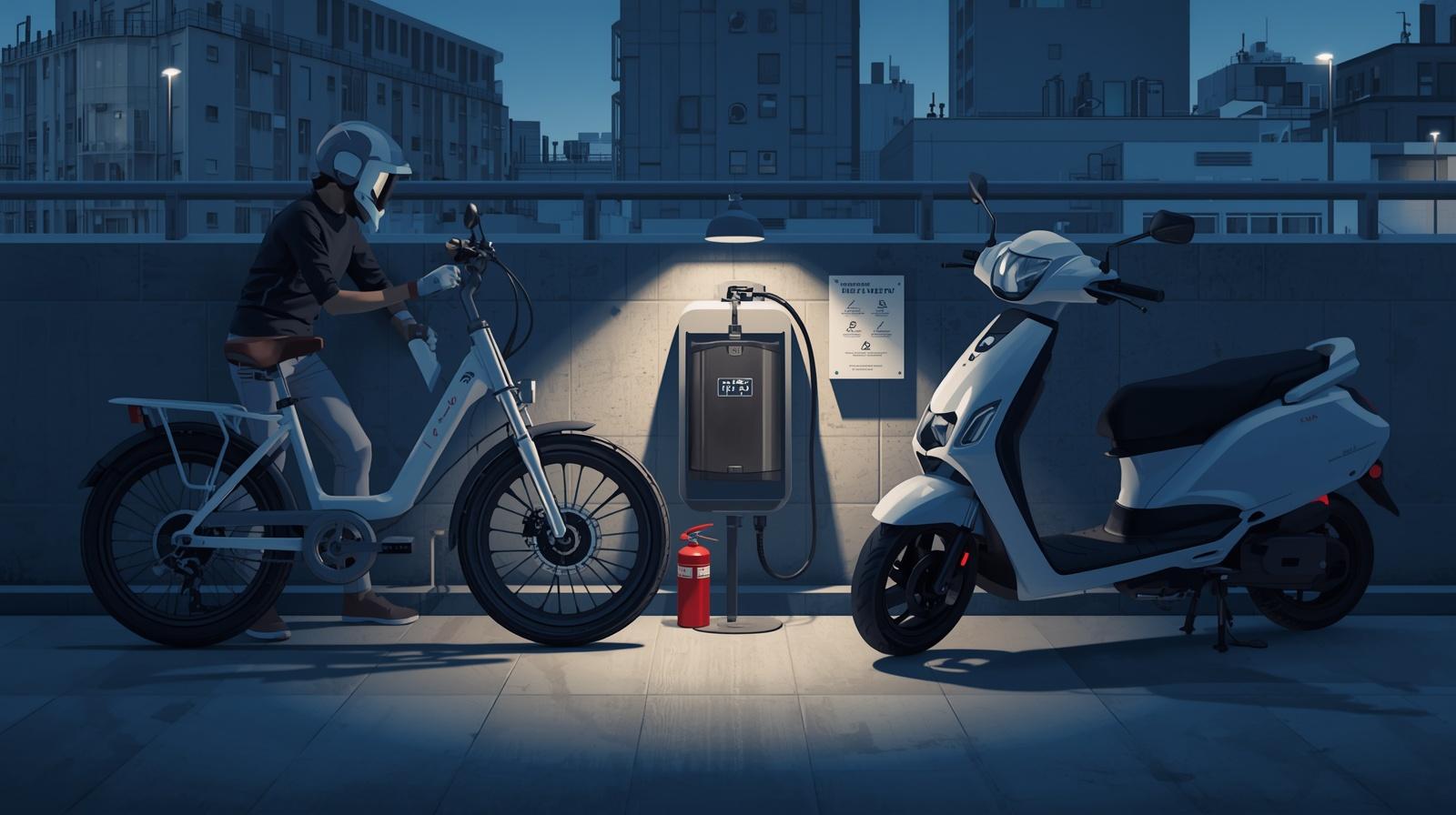
📸 Illustration of electric bike & scooter battery safety — visual guide for proper charging, storage, and maintenance practices.
4. Ride and Battery Use Precautions
Ensuring battery safety doesn’t stop at charging and storage — proper handling during every ride is equally crucial. According to a comprehensive Battery Safety Guide, taking proactive steps while riding can prevent accidents, protect your investment, and keep your electric bike or scooter performing optimally.
Here are key precautions recommended in a trusted Battery Safety Guide:
- Avoid water exposure: While most electric bikes and scooters are water-resistant, they are not fully waterproof. Riding through heavy rain, puddles, or flooded areas can cause short circuits or corrosion. A reliable Battery Safety Guide advises planning routes to minimize water contact.
- Check battery mounting: Ensure that your battery is securely locked into its compartment before every ride. Loose batteries can disconnect during movement, causing sudden power loss or potential sparks. This simple check is emphasized in every Battery Safety Guide as a routine safety step.
- Inspect for damage before riding: Never ride with a battery that is cracked, swollen, punctured, or leaking fluid. Damaged batteries are highly unstable and can lead to fire or chemical exposure. Following these guidelines from your Battery Safety Guide ensures that every ride is safe.
Incorporating these precautions into your daily routine, as recommended by a thorough Battery Safety Guide, helps protect both you and your electric vehicle. By being attentive to battery condition and proper use, you reduce the risk of accidents, prolong battery life, and maintain peak performance during every ride.
5. Heat & Fire Risk Awareness
Lithium-ion batteries, while powerful and efficient, can pose significant hazards if they overheat or become damaged. A thorough Battery Safety Guide emphasizes recognizing the early warning signs of battery distress and taking immediate action to prevent accidents, property damage, or personal injury.
If you notice that your battery begins to overheat, swell, emit smoke, or release a strange odor, follow these critical steps outlined in a trusted Battery Safety Guide:
- Stop using the device immediately: Disconnect and power down your e-bike or scooter. Continuing to operate a compromised battery can escalate the risk of fire or chemical leakage.
- Move to a safe, non-flammable area: Relocate the battery or vehicle to a concrete floor or outdoor space away from flammable materials. A key recommendation in any Battery Safety Guide is to minimize surrounding fire hazards during an overheating event.
- Do not touch a hot battery with bare hands: Elevated temperatures can cause burns or trigger chemical reactions. Use protective gloves or allow the battery to cool before handling, as advised by a reliable Battery Safety Guide.
- Call emergency services if fire develops: Maintain a safe distance and never attempt to extinguish a fully engulfed battery fire yourself unless properly equipped. A Battery Safety Guide stresses the importance of professional assistance in extreme cases.
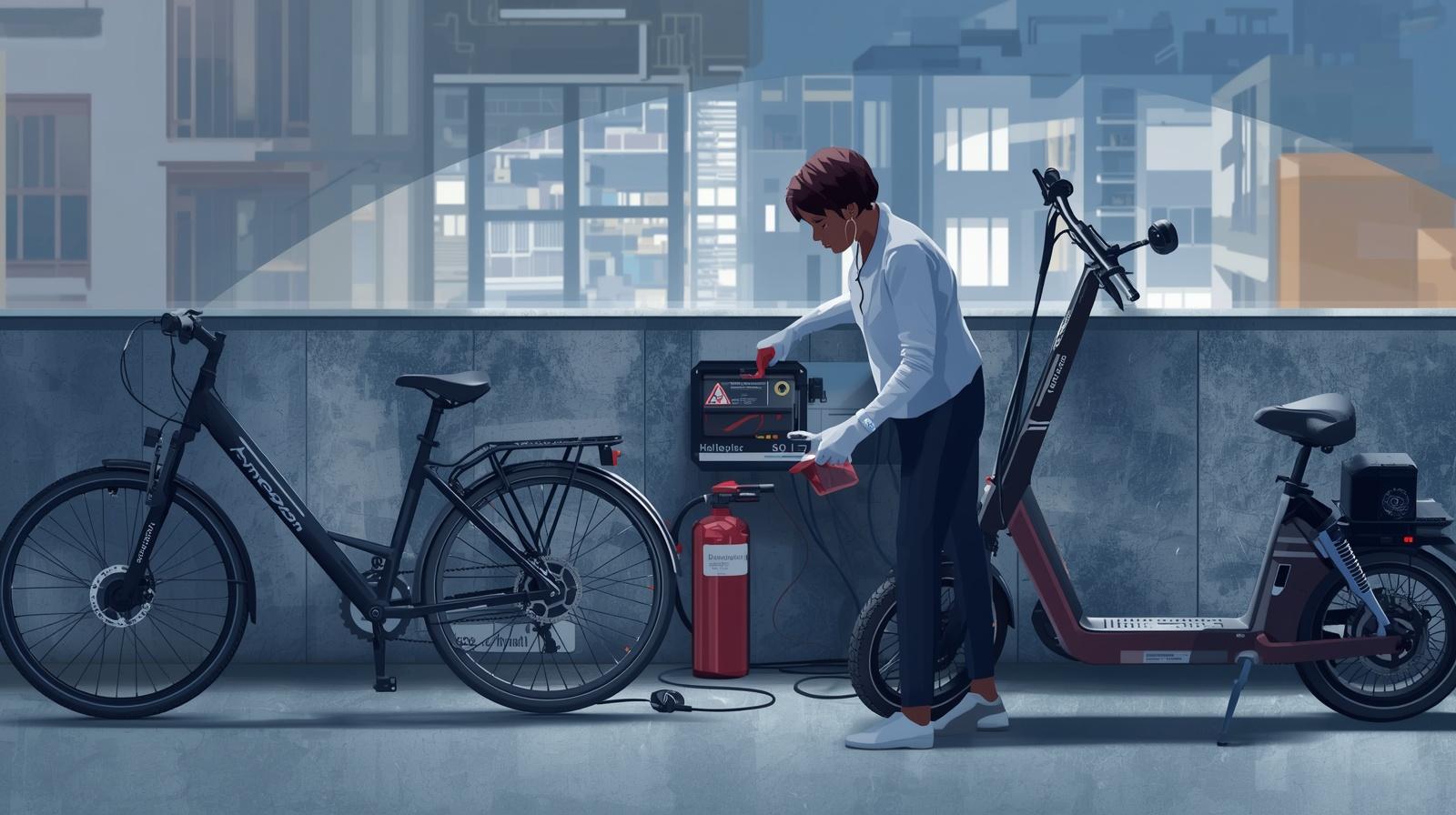
Proactive measures can prevent escalation. Many riders follow the guidance of a Battery Safety Guide by keeping a small Class C fire extinguisher near their charging area, designed specifically for electrical fires. This simple precaution can be a lifesaver, ensuring that minor overheating incidents do not turn into major emergencies.
By internalizing these heat and fire risk precautions from your Battery Safety Guide, you safeguard yourself, your property, and your electric vehicle, turning awareness into a routine habit that enhances safety every ride.
6. Best Practices for Battery Cleaning & Maintenance
Regular cleaning and maintenance are key components of a safe and long-lasting electric bike or scooter battery. Following the recommendations in a trusted Battery Safety Guide ensures that your battery operates efficiently, avoids potential hazards, and maintains optimal performance over its lifespan.
Here are essential best practices as highlighted in a comprehensive Battery Safety Guide:
- Use a damp cloth for cleaning: Gently wipe the battery contacts with a slightly damp cloth. Avoid spraying cleaners or pouring water directly onto the battery, as moisture can seep into cells and cause short circuits or corrosion. This precaution is emphasized in every Battery Safety Guide.
- Inspect electrical contacts regularly: Check for signs of corrosion, debris, or loose connections. Clean contacts gently if needed to maintain proper electrical conductivity. A proper Battery Safety Guide highlights that maintaining clean contacts is crucial for both safety and efficient charging.
- Examine the charger and cables: Frayed or exposed wires can create electrical hazards. Ensure that your charger cable is intact and functioning correctly. Following this step is a key recommendation in any reliable Battery Safety Guide.
By incorporating these cleaning and maintenance habits from a trusted Battery Safety Guide, you reduce the risk of battery failure, extend the life of your lithium-ion cells, and ensure that your electric bike or scooter remains safe for daily use. Consistent attention to these details turns routine maintenance into a core component of responsible electric mobility.
7. When to Replace Your Battery
Even with diligent care and proper maintenance, lithium-ion batteries inevitably lose capacity over time. Recognizing when it’s time to replace your battery is critical for safety and performance. A trusted Battery Safety Guide provides clear indicators to help riders determine the right moment for replacement, avoiding potential hazards and ensuring reliable operation.
You should consider replacing your battery if you observe any of the following warning signs, as emphasized in a comprehensive Battery Safety Guide:
- Significant range loss: If your electric bike or scooter can no longer travel the distances it once did on a full charge, this is a key sign that the battery’s capacity has diminished.
- Cracks, swelling, or deformities: Physical damage to the battery pack indicates instability and a higher risk of thermal events. A proper Battery Safety Guide warns against continued use of compromised batteries.
- Charger fails to fully charge: When the battery does not reach full charge despite using the correct charger, it may indicate cell degradation. Following this advice from a Battery Safety Guide prevents unexpected power loss during rides.
Most e-bike and scooter batteries are rated for 500–1,000 full charge cycles, though this varies depending on the manufacturer, battery type, and usage patterns. Consulting a Battery Safety Guide ensures that replacement decisions are based on safety, not guesswork, preserving both rider well-being and vehicle efficiency.
8. Emergency Planning & Preparedness
Even with careful charging, storage, and maintenance, unexpected battery issues can occur. A comprehensive Battery Safety Guide emphasizes the importance of being prepared for emergencies, allowing riders to respond quickly and safely while minimizing risks to themselves, others, and property.
Key steps for emergency planning and preparedness, as outlined in a reliable Battery Safety Guide, include:
- Know your local emergency contacts: Memorize or keep handy the phone number and address of your local fire department. Quick access to professional help can prevent a small incident from escalating.
- Never leave batteries unattended: Whether charging or storing your electric bike or scooter, always supervise the battery. Unattended batteries, even with smart chargers, can overheat or malfunction unexpectedly, a risk highlighted in any Battery Safety Guide.
- Keep children and pets away: Batteries in charging or storage areas should be kept out of reach. Curious hands or paws can accidentally knock over devices, causing short circuits or physical damage. A Battery Safety Guide underscores this precaution as a simple but effective safety measure.
Following these emergency preparedness steps recommended in a trusted Battery Safety Guide ensures that riders are not only proactive about preventing issues but also ready to handle unexpected situations calmly and effectively. Being prepared transforms potential hazards into manageable incidents, reinforcing safe riding habits and protecting both people and property.
Suggested topics:
10 Mistakes to Avoid When Buying electric
bikes
Complete U.S. E-Bike Laws Guide
E-Bikes and Batteries Recycling
AI and Smart Sensors
Maintain Your E-Scooter
🎥 Watch: Practical battery safety tips for electric bikes and scooters to help prevent overheating, fires, and other risks — based on real safety guidance you should follow for every ride. :contentReference[oaicite:0]{index=0}
Conclusion: Battery Safety Is Rider Safety
Electric bikes and scooters provide unmatched convenience, efficiency, and fun, but they require careful attention to battery safety. A reliable Battery Safety Guide teaches that the safety of your ride starts with understanding, monitoring, and maintaining the lithium-ion battery that powers it. From proper charging routines and safe storage to inspecting for damage and emergency preparedness, each precaution contributes to a safer and more enjoyable riding experience.
By following the principles outlined in a comprehensive Battery Safety Guide, riders can minimize the risk of overheating, fires, and battery malfunctions, protecting themselves, their vehicle, and the surrounding environment. Making battery safety a priority ensures that your e-bike or scooter delivers consistent performance while extending battery lifespan.
For those seeking additional guidance on responsible electric ride ownership, authoritative resources such as the Consumer Reports Electric Bike Safety Guide complement your Battery Safety Guide, offering practical tips, buying advice, and safety recommendations.
Remember, prioritizing your Battery Safety Guide is not just about protecting a device — it’s about protecting yourself and everyone around you. Safe battery practices transform your ride from a potential hazard into a reliable and worry-free mode of transportation.
❓ Frequently Asked Questions (FAQ) about Battery Safety for E-Bikes and Scooters
What is the safest way to charge my e-bike or scooter battery?
Can I leave my battery charging overnight?
How should I store my battery long-term?
Is it safe to ride in the rain?
What should I do if my battery overheats?
How do I clean and maintain my battery safely?
When should I replace my e-bike or scooter battery?
Are lithium-ion batteries prone to fire?
Can children or pets be near charging batteries?
Where can I find more information about battery safety?