Future E-Bike Batteries: 7 Powerful Breakthroughs Driving an Exciting Revolution
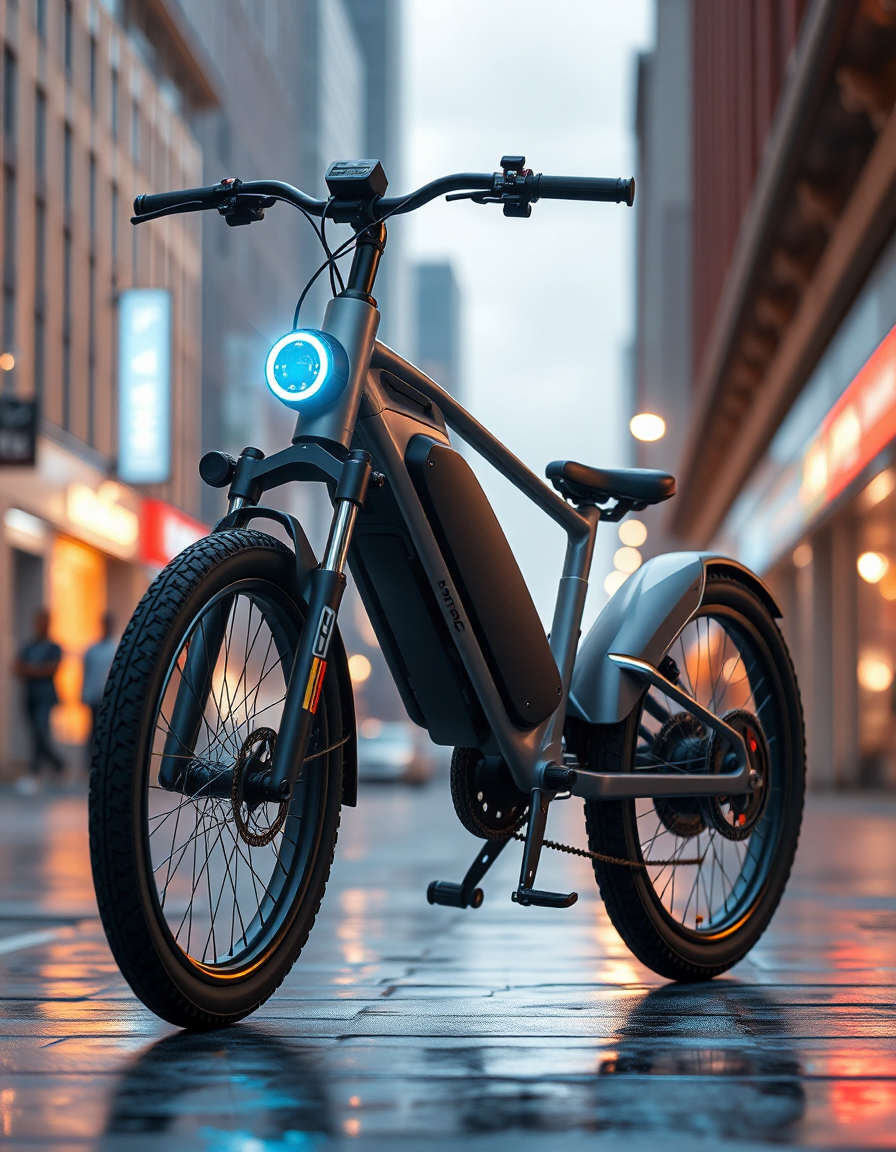
Future E-Bike Batteries: The Next Leap in Power, Size, and Materials
Electric bikes and electric scooters are evolving faster than almost any other form of personal transportation,
driven by rapid innovation in design, connectivity, and energy efficiency.
At the core of this transformation stands one defining element: Future E-Bike Batteries.
These next-generation power systems are no longer just energy containers —
they are becoming intelligent, lightweight, and structurally integrated components that shape the entire riding experience.
Over the coming decade, Future E-Bike Batteries are expected to undergo a fundamental technological shift.
Advances in energy density, thermal stability, and material science will enable batteries that deliver
significantly higher power output while occupying a fraction of the physical space used today.
This evolution will allow manufacturers to design slimmer frames, improve weight distribution,
and extend real-world riding range far beyond current limitations.
Even more transformative is the possibility that Future E-Bike Batteries will be built from
materials and architectures that are still in experimental stages — including solid-state electrolytes,
advanced composite electrodes, and smart cell-level management systems.
As these innovations move from laboratories into production,
they will redefine micromobility by making electric bikes and scooters more efficient,
more durable, and more accessible for everyday urban use.
Whether you’re building, upgrading, or maintaining an electric bike or scooter,
these tools help you calculate, predict, and optimize battery performance, range, safety, and long-term costs.
- Battery Calculator — calculate voltage, capacity, and total energy.
- Battery Pack Builder — design safe and efficient battery packs.
- Battery Lifespan Calculator — estimate battery life based on usage.
- Charging Time Calculator — calculate how long charging will take.
- Battery Degradation Predictor — forecast capacity loss over time.
- Battery Cell Configurator — plan series and parallel cell layouts.
- E-Bike Consumption Calculator — measure energy usage per ride.
- Electric Bike Range Calculator — estimate real-world riding range.
- Battery Voltage Drop Calculator — analyze voltage sag under load.
- Battery Temperature Impact Tool — see how heat and cold affect performance.
- Battery Pack Thermal Calculator — evaluate heat buildup and cooling needs.
- Battery Parallel/Series Safety Checker — verify safe wiring configurations.
- Battery Replacement Cost Predictor — estimate future replacement costs.
Read More!
Why Future E-Bike Batteries Are the Real Game Changer
Motors, controllers, and frames in modern electric bikes and scooters have already reached
impressive levels of efficiency, reliability, and performance.
Yet despite these advances, the overall riding experience is still constrained by one critical factor:
the limitations of today’s battery technology.
This is precisely why Future E-Bike Batteries are emerging as the true game changer
in the next phase of electric mobility.
Range anxiety, long charging times, excessive battery weight, and gradual capacity loss
remain key barriers to widespread adoption.
Future E-Bike Batteries aim to eliminate these obstacles not through minor optimizations,
but through fundamentally new approaches to energy storage.
Researchers and manufacturers are shifting away from incremental gains
toward disruptive breakthroughs that enable higher energy density,
faster and safer charging cycles, and dramatically extended battery lifespan.
For urban commuters, delivery riders, and long-distance enthusiasts alike,
Future E-Bike Batteries represent a decisive leap forward.
Real-world ranges of 200–300 kilometers per charge, ultra-fast top-ups at public charging points,
and slimmer vehicle designs without bulky battery housings are becoming realistic expectations
rather than distant concepts.
Ultimately, Future E-Bike Batteries do more than power electric bikes and scooters —
they redefine how these vehicles are designed, how often they are charged,
and how seamlessly they integrate into everyday urban life.
This shift positions battery innovation as the central force shaping the future of micromobility.
Solid-State Technology and the Rise of Future E-Bike Batteries
One of the most transformative breakthroughs driving the evolution of Future E-Bike Batteries
is solid-state battery technology.
Unlike conventional lithium-ion cells that rely on flammable liquid electrolytes,
solid-state batteries use a solid electrolyte that fundamentally changes how energy is stored and transferred.
This shift dramatically increases energy density, improves structural stability,
and significantly reduces safety risks such as overheating and thermal runaway.
For electric bikes and electric scooters, these advantages are particularly impactful.
Future E-Bike Batteries based on solid-state architecture can deliver more power
in a much smaller physical footprint, enabling lighter vehicles and more refined frame designs.
At the same time, the solid electrolyte allows for higher operating voltages and
more efficient charge–discharge cycles, directly translating into longer range and faster charging.
While large-scale adoption is still in development, major automotive research programs and
global battery manufacturers are already investing heavily in solid-state solutions.
As production methods mature and costs decline, these innovations are expected to cascade
into the micromobility sector.
When fully adapted, Future E-Bike Batteries built on solid-state technology
could be up to 50% smaller while delivering equal or even greater capacity than today’s best lithium-ion packs.
Beyond performance gains, solid-state systems also promise longer service life and improved sustainability.
Reduced degradation over thousands of charge cycles means Future E-Bike Batteries
may last for the entire lifespan of the vehicle, reshaping ownership models and reducing electronic waste.
Learn more about solid-state battery fundamentals at
the U.S. Department of Energy
.
Beyond Lithium: New Materials Powering Future E-Bike Batteries
Lithium has defined the modern era of electric mobility, but its dominance is unlikely to last forever.
As demand for electric bikes and scooters accelerates worldwide, researchers are actively exploring
alternative chemistries that could unlock the next evolutionary step in Future E-Bike Batteries.
These efforts focus on reducing reliance on scarce resources, lowering production costs,
and delivering higher performance with improved environmental sustainability.
Among the most promising candidates are sodium-ion and lithium-sulfur batteries.
Sodium-ion technology offers a more abundant and geographically accessible raw material,
making Future E-Bike Batteries potentially cheaper and more resilient to supply chain disruptions.
Lithium-sulfur systems, on the other hand, promise dramatically higher theoretical energy density,
opening the door to longer ranges without increasing battery size or weight.
More experimental concepts, such as aluminum-air and zinc-based batteries,
are also being evaluated for their suitability in micromobility applications.
While still far from mass adoption, these technologies hint at a future where
Future E-Bike Batteries are designed around application-specific performance rather than
one-size-fits-all chemistry.
At the material level, advanced approaches involving graphene-enhanced electrodes,
nano-structured composites, and bio-engineered compounds are improving ion mobility
and structural stability at the molecular scale.
These innovations could significantly reduce internal resistance and degradation,
allowing Future E-Bike Batteries to charge faster, last longer,
and operate more efficiently across a wider range of temperatures.
As these material breakthroughs move from research labs into scalable manufacturing,
they will redefine what is possible in electric bikes and scooters.
The future points toward Future E-Bike Batteries that are not only more powerful and compact,
but also fundamentally more sustainable throughout their entire lifecycle.
For cutting-edge battery material research, see
Nature’s battery research section
.
Smarter Battery Architecture for Future E-Bike Batteries
The evolution of battery technology is not driven by chemistry alone.
Equally transformative is the way energy storage is physically structured and integrated.
As electric bikes and scooters continue to evolve, the architecture of
Future E-Bike Batteries is undergoing a fundamental redesign.
Engineers are moving beyond the concept of a single, centralized battery pack
toward smarter, more flexible energy systems built around modular micro-cells
and distributed layouts.
In these next-generation designs, energy storage is spread across multiple locations
within the bike or scooter frame.
This approach dramatically improves weight distribution, lowers the center of gravity,
and enhances overall ride stability.
By eliminating the need for bulky external housings,
Future E-Bike Batteries can be seamlessly integrated into frame tubes,
decks, or structural components, making the battery nearly invisible to the rider.
Beyond aesthetics, smarter battery architecture also delivers meaningful safety and durability benefits.
Distributed cell layouts reduce thermal concentration and limit the impact of individual cell failures.
Combined with advanced battery management systems,
Future E-Bike Batteries can actively monitor, isolate, and optimize each module in real time,
extending lifespan while maintaining consistent performance.
This architectural shift opens entirely new design possibilities for manufacturers.
Frames can be lighter, slimmer, and more customizable,
while riders benefit from cleaner designs and improved handling.
Ultimately, smarter architecture positions Future E-Bike Batteries
as an integral structural element rather than a separate add-on,
redefining how electric bikes and scooters are engineered from the ground up.
Charging Speed and Lifecycle: The Hidden Strength of Future E-Bike Batteries
Charging speed has emerged as one of the most critical performance metrics in electric mobility.
While today’s lithium-ion batteries can technically charge faster,
doing so often accelerates degradation and shortens overall lifespan.
This limitation is precisely what Future E-Bike Batteries are designed to overcome
through a combination of advanced thermal management, intelligent cell monitoring,
and self-regulating charging algorithms.
Instead of applying uniform charging power across the entire pack,
Future E-Bike Batteries dynamically adjust current flow at the cell level.
Temperature, voltage, and internal resistance are continuously analyzed in real time,
allowing the battery to accept higher charging speeds without inducing long-term damage.
This approach transforms fast charging from a trade-off into a sustainable advantage.
In practical terms, this means electric bikes and scooters could reach 70–80% capacity
in under ten minutes while preserving long-term battery health.
When paired with next-generation chemistries and solid-state architectures,
Future E-Bike Batteries are expected to exceed 3,000 full charge cycles,
effectively lasting for the entire operational lifespan of the vehicle.
The result is a fundamental shift in how riders interact with their vehicles.
With ultra-fast top-ups and minimal performance degradation over time,
Future E-Bike Batteries eliminate range anxiety,
reduce maintenance costs, and make electric micromobility a truly frictionless
alternative to traditional transportation.
How Future E-Bike Batteries Will Redefine Urban Mobility
The transformative potential of Future E-Bike Batteries extends far beyond individual riders.
By enabling lighter, more compact energy storage, these next-generation batteries directly reduce vehicle weight,
improve handling, and lower energy consumption per kilometer.
Lighter vehicles also place less strain on urban infrastructure, allowing cities to maintain roadways and
public bike lanes more efficiently.
As Future E-Bike Batteries achieve higher energy densities and longer lifespans,
shared mobility programs can operate with fewer battery replacements and extended service intervals.
This creates a more sustainable and cost-effective urban transport ecosystem,
where electric bikes and scooters can reliably serve thousands of riders with minimal downtime.
Improved range and charging performance mean that electric bikes could increasingly replace short car trips,
contributing to reduced traffic congestion, lower emissions, and a cleaner urban environment.
Future E-Bike Batteries are not merely a technological upgrade — they represent a
structural paradigm shift, redefining how cities approach mobility, urban planning, and transportation policy.
In essence, Future E-Bike Batteries will empower urban riders to move faster, farther, and more sustainably,
while enabling cities to design transportation networks around efficient, lightweight, and flexible vehicles.
The integration of advanced battery technology is poised to be one of the defining factors
in the global transition toward smarter, greener urban mobility.
Suggested topics:
10 Mistakes to Avoid When Buying electric bikes
Complete U.S. E-Bike Laws Guide
E-Bikes and Batteries Recycling
AI and Smart Sensors
Smart Urban Riding Etiquette
🎥 Watch: How solid-state battery technology could power the next generation of high-performance e‑bikes — improving range, safety, and charging speed for Future E‑Bike Batteries. :contentReference[oaicite:0]{index=0}
Looking Ahead: A Battery-Driven Future
The next wave of micromobility innovation will be defined by Future E-Bike Batteries
that are not only smaller and lighter, but also smarter, safer, and fundamentally different
from anything currently on the market.
These batteries promise to unlock unprecedented design possibilities, extend riding ranges,
and deliver performance levels that were previously considered impossible for electric bikes and scooters.
Future E-Bike Batteries are set to transform the entire ecosystem of urban mobility.
Riders will experience longer journeys with faster, more reliable charging,
manufacturers will be able to create slimmer, more efficient vehicles,
and urban planners can rethink transportation infrastructure around lightweight, high-capacity micromobility.
For anyone involved in the electric mobility landscape, understanding Future E-Bike Batteries
is essential for anticipating technological trends, designing next-generation vehicles,
and making informed decisions about sustainability and city planning.
At RideWattly.com, we remain dedicated to tracking these groundbreaking developments
as they transition from research labs to the streets, ensuring our readers stay ahead
in the rapidly evolving world of electric bikes and scooters.
Ultimately, Future E-Bike Batteries are more than just power sources;
they are the foundation of a battery-driven future that will reshape how we move,
live, and interact with our urban environments.
❓ Frequently Asked Questions (FAQ) about Future E-Bike Batteries
What are Future E-Bike Batteries?
How do solid-state batteries improve E-Bike performance?
What new materials are being explored for Future E-Bike Batteries?
Can Future E-Bike Batteries charge faster without degrading?
How will battery architecture change in the future?
What is the expected lifespan of Future E-Bike Batteries?
How will Future E-Bike Batteries impact urban mobility?
Are Future E-Bike Batteries environmentally friendly?
Will Future E-Bike Batteries make electric bikes lighter?
Where can I learn more about battery innovations?