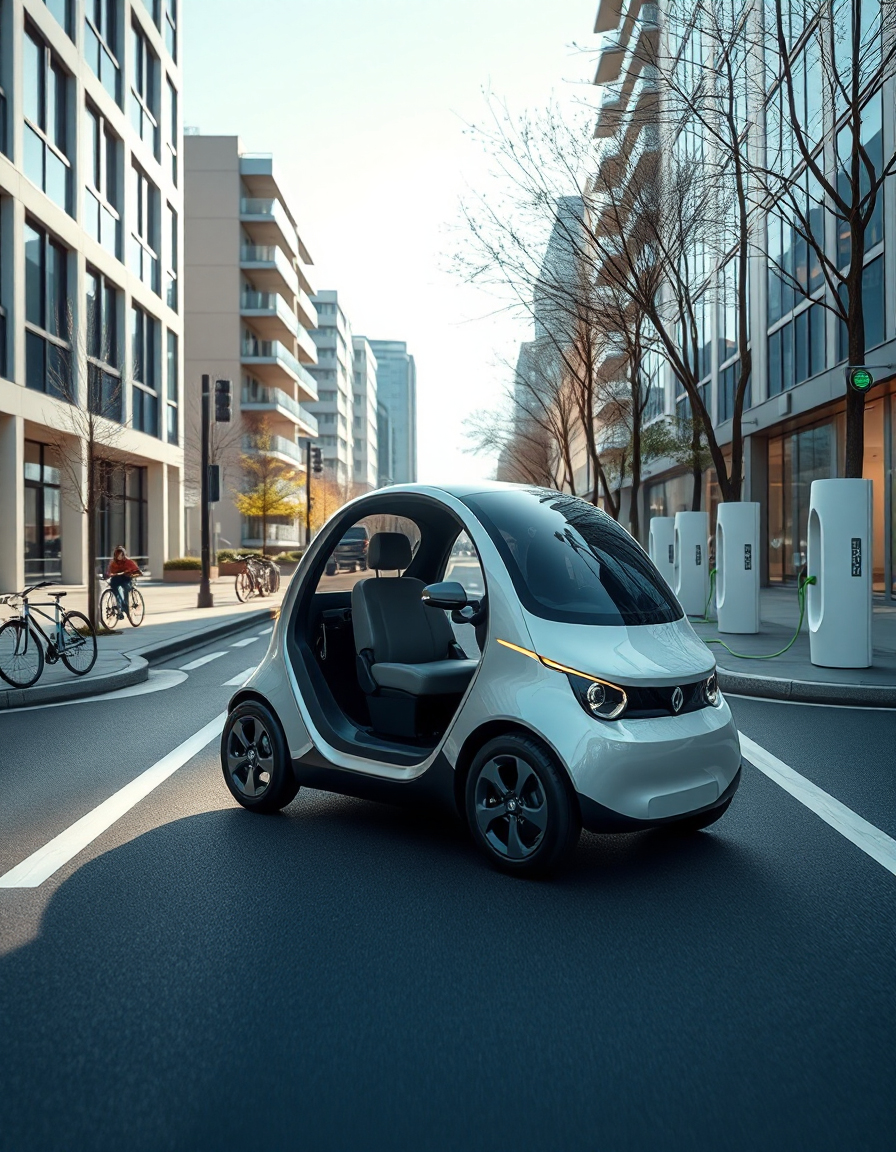
The All‑Solid‑State Donut Battery: Revolutionizing EV Range and Vehicle Weight with 400 Wh/kg Energy Density

The All‑Solid‑State Donut Battery: Finally, 400 Wh/kg That Transforms EV Performance
The All‑Solid‑State Donut Battery: Revolutionizing EV Range and Vehicle Weight with 400 Wh/kg Energy Density represents a groundbreaking leap in electric mobility. As the industry races to achieve lighter, more efficient, and safer electric vehicles, this pioneering battery technology delivers an unprecedented combination of performance, compactness, and durability. Unlike traditional lithium-ion cells, which rely on liquid electrolytes, the Donut Battery employs a solid-state architecture that not only achieves an industry-leading 400 Wh/kg energy density but also dramatically enhances safety by minimizing risks of thermal runaway and chemical leakage.
With this level of energy density, the All‑Solid‑State Donut Battery: Revolutionizing EV Range and Vehicle Weight with 400 Wh/kg Energy Density enables EV designers to rethink vehicle architecture entirely. Lighter battery packs reduce overall vehicle mass, improving acceleration, handling, and energy efficiency. For motorcycles, scooters, and even compact electric cars, this translates directly into longer ranges without increasing battery size — a transformative advantage for urban mobility, commuting, and recreational use. Beyond sheer performance, the Donut Battery’s fast-charging capability and extended cycle life make it a sustainable choice for the next generation of EVs, ensuring that vehicles remain both high-performing and reliable throughout their lifetime.
In essence, the All‑Solid‑State Donut Battery: Revolutionizing EV Range and Vehicle Weight with 400 Wh/kg Energy Density is not just an incremental improvement; it is a paradigm shift. By combining high energy density, lightweight design, and solid-state safety, it sets a new benchmark for electric mobility, providing manufacturers and consumers alike with the tools to unlock the full potential of EV technology in the coming years.
The The All-Solid-State Donut Battery: Revolutionizing EV Range and Vehicle Weight with 400 Wh/kg Energy Density
represents a major leap in battery technology. The following tools help readers, engineers, and EV enthusiasts analyze energy density, charging behavior,
thermal performance, lifecycle cost, and real-world impact of advanced solid-state battery systems.
- Battery Calculator — calculate voltage, capacity, and total energy (Wh) to understand how 400 Wh/kg impacts vehicle range.
- Battery Pack Builder — visualize how compact, lightweight solid-state packs enable new vehicle architectures.
- Battery Lifespan Calculator — estimate long-term usability and compare traditional lithium-ion packs with ultra-high cycle solid-state batteries.
- Battery Degradation Predictor — model how solid electrolytes reduce aging, dendrite growth, and capacity loss.
- Charging Time Calculator — explore how ultra-fast charging (minutes instead of hours) reshapes EV usability.
- Charging Curve Simulator — simulate how solid-state chemistry enables safe 100% charging without traditional lithium-ion limits.
- Battery Pack Thermal Calculator — analyze heat behavior and safety advantages of non-flammable solid electrolytes.
- Battery Replacement Cost Predictor — understand how 100,000-cycle durability drastically lowers total cost of ownership.
- Carbon Offset Calculator — evaluate how longer-lasting batteries reduce environmental impact across the EV lifecycle.
- E-Mobility Trend Radar — track how solid-state breakthroughs influence motorcycles, EVs, robotics, and future mobility platforms.
Read More!
What Is the All‑Solid‑State Donut Battery?
The All‑Solid‑State Donut Battery: Revolutionizing EV Range and Vehicle Weight with 400 Wh/kg Energy Density marks a transformative milestone in battery technology. At CES 2026, Donut Lab unveiled the world’s first production-ready solid-state battery under the “Donut Battery” brand, boasting an extraordinary 400 Wh/kg energy density — far surpassing the 250–300 Wh/kg typical of today’s conventional lithium-ion batteries. This leap in energy density not only enables vehicles to travel longer distances on a single charge but also allows designers to create lighter, more efficient EVs that were previously unattainable with traditional battery architectures.
Unlike conventional lithium-ion cells that rely on liquid electrolytes, the All‑Solid‑State Donut Battery: Revolutionizing EV Range and Vehicle Weight with 400 Wh/kg Energy Density replaces the liquid with a solid electrolyte. This fundamental innovation enhances both performance and safety: the solid-state structure mitigates risks of thermal runaway, prevents electrolyte leakage, and allows for higher voltage operation. Additionally, the compact nature of the solid-state design maximizes energy storage within a smaller footprint, giving engineers unprecedented freedom to optimize vehicle weight distribution and interior packaging without compromising range or power delivery.
In essence, the All‑Solid‑State Donut Battery: Revolutionizing EV Range and Vehicle Weight with 400 Wh/kg Energy Density is more than a battery — it is a cornerstone of the next generation of electric mobility, redefining how we approach efficiency, safety, and performance in motorcycles, cars, and light EV platforms worldwide.
Understanding Energy Density: Why 400 Wh/kg Matters
When it comes to electric mobility, the All‑Solid‑State Donut Battery: Revolutionizing EV Range and Vehicle Weight with 400 Wh/kg Energy Density sets a new benchmark for energy storage. Energy density — measured in watt‑hours per kilogram (Wh/kg) — is a critical metric in determining how much energy a battery can store relative to its weight. Achieving a density of 400 Wh/kg allows the Donut Battery to store significantly more energy without increasing mass, a decisive advantage for electric vehicles where every kilogram directly affects range, efficiency, and overall performance.
- Extended range: The All‑Solid‑State Donut Battery: Revolutionizing EV Range and Vehicle Weight with 400 Wh/kg Energy Density enables EVs to travel substantially farther on a single charge compared to conventional lithium-ion batteries. For motorcycles like the Verge TS Pro, this translates into real-world ranges approaching 600 km, transforming long-distance commuting and touring possibilities.
- Lighter vehicle weight: By delivering high energy storage in a compact form factor, the Donut Battery reduces overall vehicle weight. Lighter vehicles benefit from improved acceleration, braking, handling, and energy efficiency — critical factors for two-wheeled EVs and high-performance applications.
- Design freedom: The compact yet high-capacity design of the All‑Solid‑State Donut Battery: Revolutionizing EV Range and Vehicle Weight with 400 Wh/kg Energy Density empowers engineers to rethink battery integration. This opens opportunities for innovative packaging, optimized center-of-gravity placement, and even embedding the battery into structural elements without compromising safety or range.
For those seeking deeper technical insight, the principles of solid-state energy storage that underpin the Donut Battery are well explained in this Wikipedia overview. Understanding these fundamentals highlights why the All‑Solid‑State Donut Battery: Revolutionizing EV Range and Vehicle Weight with 400 Wh/kg Energy Density is not just a marginal improvement, but a transformative advancement for the EV industry.
Fast Charging and Durability: Breaking Historic Barriers
The All‑Solid‑State Donut Battery: Revolutionizing EV Range and Vehicle Weight with 400 Wh/kg Energy Density is redefining the limits of what electric vehicles can achieve. Beyond its record-setting energy density, this cutting-edge battery delivers revolutionary fast-charging capabilities, allowing a full charge in as little as five minutes. This shatters the constraints of conventional lithium-ion batteries, which often limit charging to 80% to preserve longevity, and introduces a new era of convenience and practicality for riders and drivers alike. With this technology, long-distance trips, rapid urban commuting, and high-utilization fleet operations become not just feasible, but seamless.
Durability is equally transformative. The All‑Solid‑State Donut Battery: Revolutionizing EV Range and Vehicle Weight with 400 Wh/kg Energy Density is designed to endure up to 100,000 charge cycles, far exceeding the lifecycle of traditional lithium-ion systems. This extraordinary longevity reduces maintenance costs, improves total cost of ownership, and supports sustainable mobility by extending the lifespan of every EV powertrain it powers. The combination of ultra-fast charging, exceptional cycle life, and lightweight, high-density design positions the Donut Battery as a cornerstone of next-generation electric mobility, empowering manufacturers to deliver vehicles that are safer, lighter, longer-ranged, and more energy-efficient than ever before.
In short, the All‑Solid‑State Donut Battery: Revolutionizing EV Range and Vehicle Weight with 400 Wh/kg Energy Density does not simply improve on existing battery technology — it transforms the fundamental experience of electric vehicles, setting a new industry benchmark for speed, durability, and performance.
Safety Advances With Solid Electrolytes
The All‑Solid‑State Donut Battery: Revolutionizing EV Range and Vehicle Weight with 400 Wh/kg Energy Density goes beyond high energy density and durability to deliver unprecedented safety improvements. Traditional lithium-ion batteries rely on flammable liquid electrolytes, which can lead to thermal runaway, dendrite formation, and catastrophic fires under stress or damage. By replacing liquid electrolytes with a solid-state alternative, the Donut Battery dramatically reduces these risks, creating a safer, more reliable energy storage solution for electric motorcycles, scooters, and cars.
This inherent safety advantage enables engineers and automotive designers to adopt bolder packaging strategies and optimize vehicle architecture without compromising protection. With the All‑Solid‑State Donut Battery: Revolutionizing EV Range and Vehicle Weight with 400 Wh/kg Energy Density, EV manufacturers can integrate higher-capacity packs closer to critical components or within structural elements, achieving superior weight distribution and enhanced handling. For a technical deep dive into how solid electrolytes improve battery safety and performance, see the detailed discussion from Ilika. ([ilika.com](https://www.ilika.com/images/uploads/general/Rho-Motion-Webinar-Oct-21-Ilika.pdf?utm_source=chatgpt.com))
In essence, the All‑Solid‑State Donut Battery: Revolutionizing EV Range and Vehicle Weight with 400 Wh/kg Energy Density not only elevates performance and range but also establishes a new standard for safety, addressing one of the most critical challenges in high-energy EV battery design.
Real‑World Deployment: From Motorcycles to Modular EV Platforms
The All‑Solid‑State Donut Battery: Revolutionizing EV Range and Vehicle Weight with 400 Wh/kg Energy Density is no longer just a concept — it is entering real-world deployment. Verge Motorcycles has announced that its 2026 models, including the TS Pro and Ultra, will come equipped with Donut Battery packs, with deliveries scheduled to begin in Q1 2026. These motorcycles showcase how the combination of ultra-high energy density, fast charging, and lightweight design directly transforms the rider experience, enabling longer journeys, quicker turnaround times, and greater overall convenience.
Beyond motorcycles, the All‑Solid‑State Donut Battery: Revolutionizing EV Range and Vehicle Weight with 400 Wh/kg Energy Density is highly adaptable. Its modular design allows production in multiple sizes and formats, making it suitable for a wide spectrum of electric vehicles, from compact cars and scooters to industrial robotics, smart trailers, and other mobility platforms. OEMs across automotive and transportation sectors are evaluating the Donut Battery as a foundational component to enhance performance, reduce vehicle weight, and extend operational range, demonstrating its potential to reshape the future of electric mobility on multiple fronts.
Challenges and the Broader Solid‑State Landscape
While the All‑Solid‑State Donut Battery: Revolutionizing EV Range and Vehicle Weight with 400 Wh/kg Energy Density represents a groundbreaking leap in energy storage, it exists within a highly competitive global race toward advanced solid-state technologies. Major players, from Toyota to Samsung, are aggressively developing high-energy-density solid-state cells, aiming for 400 Wh/kg or higher. Yet, timelines, production scalability, and commercialization strategies vary widely across the industry, highlighting both the promise and the technical challenges inherent in bringing next-generation batteries to market.
Despite these challenges, Donut Lab’s claims of production-ready performance — if realized at scale — could redefine industry expectations. The All‑Solid‑State Donut Battery: Revolutionizing EV Range and Vehicle Weight with 400 Wh/kg Energy Density has the potential to accelerate adoption across electric vehicles, enabling longer range, faster charging, and lighter vehicle architectures. Beyond transportation, its impact may extend to aviation, marine applications, and stationary energy storage systems, positioning solid-state batteries as a cornerstone of sustainable and high-performance energy solutions for the coming decade.
Suggested topics:
10 Mistakes to Avoid When Buying electric bikes
Complete U.S. E-Bike Laws Guide
E-Bikes and Batteries Recycling
AI and Smart Sensors
Smart Urban Riding Etiquette
🎥 Watch: A deep dive into the world’s first production‑ready all‑solid‑state battery technology — showing how solid‑state innovations like the Donut Battery deliver ultra‑high energy density and revolutionize EV range, weight, and performance. :contentReference[oaicite:0]{index=0}
Conclusion
The All‑Solid‑State Donut Battery: Revolutionizing EV Range and Vehicle Weight with 400 Wh/kg Energy Density stands at the forefront of next-generation battery innovation. By combining an industry-leading 400 Wh/kg energy density with ultra-fast charging capabilities, exceptional durability, and inherent safety advantages, this technology redefines the benchmarks for electric vehicles. Its introduction into production platforms promises to reshape consumer expectations, making long range, rapid charging, and lightweight vehicle architecture the new standard across motorcycles, scooters, cars, and modular EV systems.
Beyond personal mobility, the All‑Solid‑State Donut Battery: Revolutionizing EV Range and Vehicle Weight with 400 Wh/kg Energy Density serves as a catalyst for broader electrification efforts. As the solid-state battery ecosystem continues to evolve, Donut Lab’s breakthrough is likely to influence design strategies across automotive, industrial, aviation, and stationary energy storage sectors, establishing a new paradigm for high-performance, safe, and sustainable energy solutions. For more insights into solid-state battery developments and emerging trends in electric mobility, refer to detailed industry analyses such as CleanTechnica’s coverage.
❓ Frequently Asked Questions (FAQ) about The All‑Solid‑State Donut Battery
What is the All‑Solid‑State Donut Battery?
How does the Donut Battery improve EV range?
What are the safety advantages of the Donut Battery?
How fast can the Donut Battery be charged?
What is the expected lifespan of the Donut Battery?
Can the Donut Battery be used in vehicles other than motorcycles?
How does the Donut Battery affect vehicle weight?
Who is currently deploying the Donut Battery?
What are the main challenges for solid-state battery adoption?
How does the Donut Battery influence the future of EV technology?