Avoid Overpaying: Understanding Electric Scooter Components and How They Affect Price
Understanding Electric Scooter Components and How They Affect Price
Electric scooters have become a staple of modern urban transportation, providing a convenient, eco-friendly, and cost-effective way to navigate city streets. Yet, the price range for these scooters varies widely, from entry-level models under $300 to premium models exceeding $1,500. Understanding why this happens requires a closer look at the electric scooter components that make up the device.
The motor, battery, frame, suspension, braking system, and electronic controls are all key electric scooter components that directly influence both performance and cost. For example, a high-capacity lithium-ion battery with an advanced Battery Management System (BMS) allows for longer ranges and safer operation, but it significantly increases the price. Similarly, a powerful brushless motor can handle steep hills and heavy riders, whereas a smaller motor limits speed and load capacity, reflecting a lower cost. The choice of frame material, from standard aluminum to lightweight carbon fiber, also impacts durability, weight, and ultimately the market price.
Other electric scooter components like suspension, tires, and braking systems contribute not only to rider comfort and safety but also to the final cost of the scooter. Premium hydraulic disc brakes or full suspension setups provide a smoother, safer ride but come with a higher price tag. Even seemingly small electronics, such as smart displays, regenerative braking, or app connectivity, are considered part of the essential electric scooter components that can influence both user experience and the product’s retail value.
Beyond the individual components, brand reputation plays a role in pricing. Established manufacturers often charge a premium for the reliability, testing, and warranty support associated with their products. However, by understanding the core electric scooter components, buyers can make informed decisions and identify models that offer the best balance between cost and performance, without automatically assuming that higher price equals higher quality.
Understanding electric scooter components and how they affect price is easier when you have the right tools.
These resources help you analyze parts, compare models, and make informed buying choices for optimal performance and value.
- Compare E-Bikes & Scooters — evaluate specifications, components, and prices to find the best fit.
- E-Bike Component Matcher — check compatibility of motors, batteries, and electronics for your needs.
- Battery Pack Builder — explore battery configurations and capacities to balance range and cost.
- Battery Lifespan Calculator — predict battery life based on usage patterns and component quality.
- E-Bike Cost of Ownership — understand total costs including parts, maintenance, and upgrades.
- Motor Power Estimator — determine if the motor suits your riding style and terrain.
- Regenerative Braking Efficiency Tool — analyze braking system performance and its effect on battery and safety.
Read More!
1. Key Electric Scooter Components That Drive Cost
Understanding the core electric scooter components is essential for anyone looking to purchase an electric scooter or bike. Each component contributes not only to performance and safety but also heavily impacts the final price. The better the quality and technology of each component, the higher the cost, but also the higher the reliability and lifespan of the scooter.
- Motor: The motor is one of the most critical electric scooter components. Brushless motors with higher wattage provide superior speed, torque, and efficiency. For example, a 500W motor is suitable for casual city commuting, while a 1000W or 1500W motor can handle steeper inclines and heavier loads. Premium motors often feature advanced cooling systems and longer warranties, increasing the overall price.
- Battery: Lithium-ion batteries form the heart of an electric scooter’s power system and are among the most expensive electric scooter components. Higher voltage and amp-hour ratings provide longer ranges and more consistent performance, but cost more upfront. Integrated Battery Management Systems (BMS) add safety and durability, preventing overcharging, overheating, and extending battery life, which also justifies a higher price point.
- Frame and Build: The frame material and build quality are essential electric scooter components affecting both safety and weight. Aerospace-grade aluminum, reinforced steel, or even carbon fiber frames are lightweight yet strong, improving ride stability and portability. Premium materials increase manufacturing costs but enhance durability, comfort, and resale value.
- Suspension and Tires: Suspension systems and tire types significantly influence ride comfort and handling. Pneumatic tires with full suspension absorb shocks better than solid tires and rigid frames, reducing fatigue on longer rides. These electric scooter components are costlier but essential for riders prioritizing smooth performance and safety on uneven urban terrain.
- Braking Systems: Brakes are another critical set of electric scooter components that affect safety and price. Hydraulic disc brakes outperform mechanical or drum brakes, offering precise stopping power and longer service life. High-end braking systems also include features like regenerative braking, which can partially recharge the battery during deceleration, combining performance with efficiency.
- Electronics and Display: Modern electric scooters include a suite of electronics such as digital displays, smart connectivity, GPS tracking, and regenerative braking controls. These electric scooter components not only enhance usability but also increase the cost, especially when integrated with mobile apps or advanced firmware that optimize performance and monitor scooter health.
For those looking to dive deeper into selecting the right electric scooter components for their needs, trusted resources like Electric Bike Report offer detailed reviews and buying guides to help balance cost, performance, and durability.
2. How Brand Influences Electric Scooter Prices
While the quality of electric scooter components largely determines performance and safety, brand reputation plays a pivotal role in pricing as well. Established brands often charge a premium not only for marketing but for the assurance that every component—from motor and battery to suspension and electronics—meets rigorous quality standards.
Premium brands ensure that all electric scooter components undergo extensive testing, resulting in higher durability and reliability. They also provide:
- High-quality electric scooter components and comprehensive durability testing
- Extended warranty coverage and responsive customer support
- Advanced software, firmware updates, and smart connectivity features integrated with the electric scooter components
However, it’s important to recognize that a higher price does not always guarantee superior performance. Some lesser-known brands may offer scooters with high-grade electric scooter components at a more affordable cost, but they might compromise on after-sales support, longevity, or integrated electronics. Understanding the specific electric scooter components in each model helps buyers make informed decisions beyond the brand name.
Well-known brands such as Xiaomi and Segway have set high standards for quality, reliability, and safety. Still, independent reviews and component-focused comparisons often reveal alternative models that balance cost, performance, and durability. By evaluating the quality of electric scooter components rather than relying solely on branding, riders can find a scooter that offers maximum value for their investment.
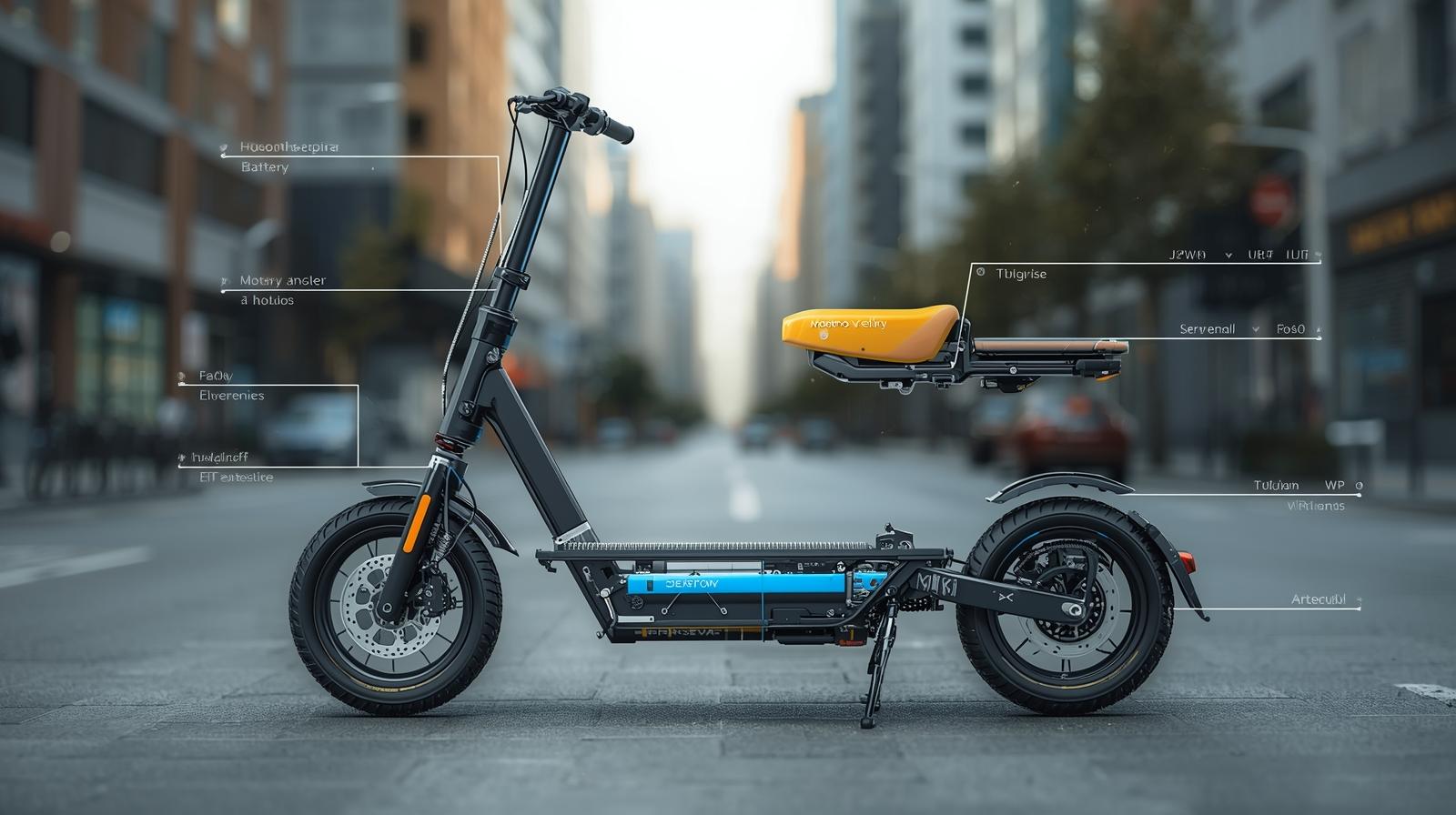
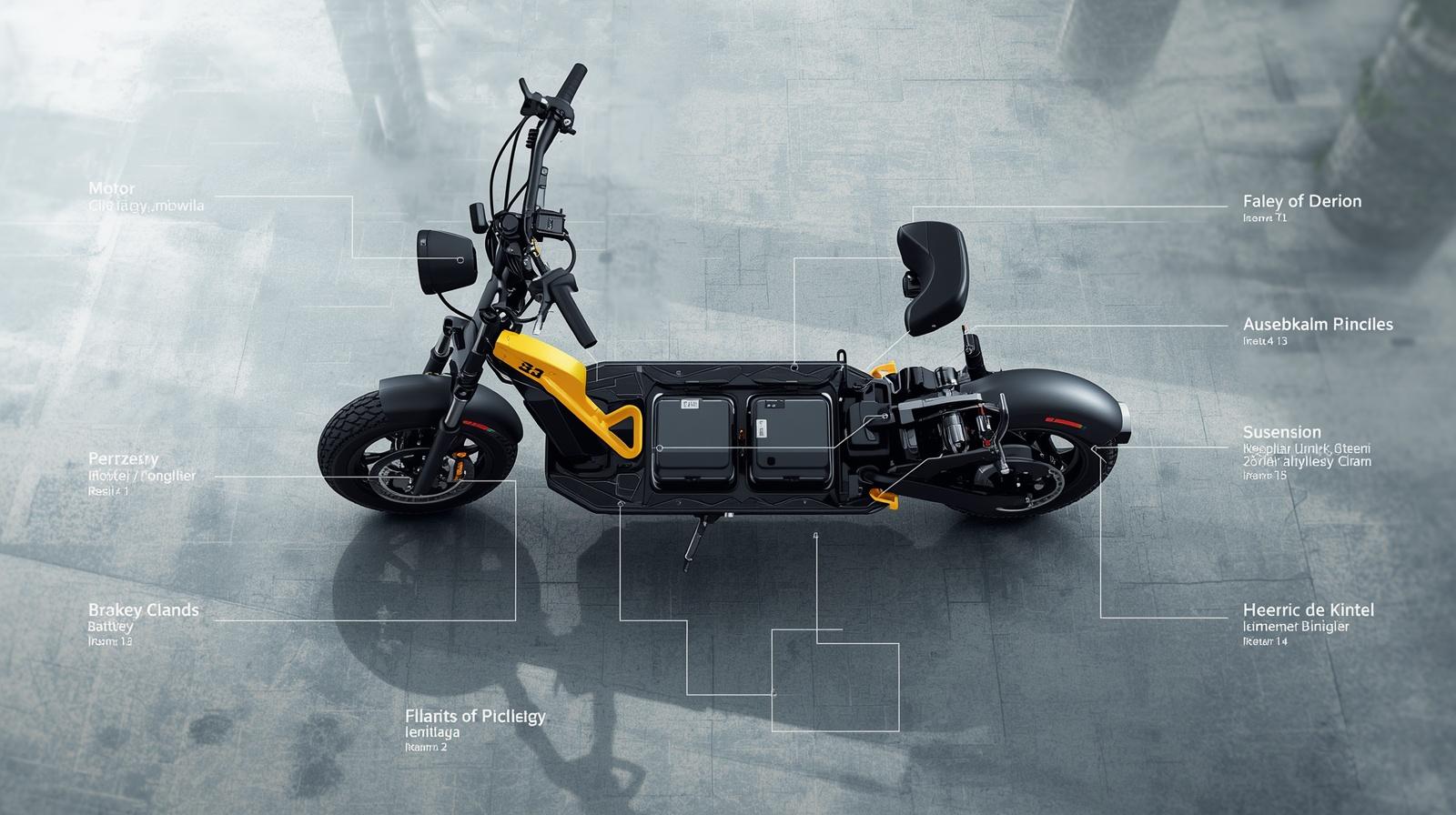
🛴 Visual Guide: This image shows a detailed diagram of electric scooter components, including motor, battery, brakes, suspension, and electronics, helping you understand how each part affects performance and price.
3. Balancing Components and Price
When purchasing an electric scooter or bike, it is essential to understand how electric scooter components interact with price. Each component contributes differently to overall performance, durability, and cost. Knowing which electric scooter components are critical for your needs can help you avoid overpaying for features that provide little practical benefit.
- Motor & Battery: The motor and battery are the two most influential electric scooter components affecting speed, range, and overall ride quality. Selecting a motor with sufficient wattage and a battery with the right voltage and capacity ensures you achieve your desired performance without paying for excessive power that you may never use. Advanced Battery Management Systems (BMS) can add value, but only if the extended range or safety features are important for your use case.
- Frame & Suspension: The materials and construction of the frame, combined with the suspension system, determine ride comfort, weight, and portability. Premium frames and full suspension systems are among the most expensive electric scooter components. Evaluate whether these features are essential for your typical routes and terrain, so you don’t overpay for high-end engineering that you may not need.
- Electronics & Smart Features: Modern scooters often include digital displays, app connectivity, regenerative braking, and other electronic enhancements. While these electric scooter components can significantly improve usability, they may not justify a substantial price increase for casual riders who primarily use the scooter for short urban commutes. Focusing on the core components that impact safety and performance ensures the best balance of cost and value.
Ultimately, the final price of an electric scooter is a combination of the quality of its electric scooter components, brand reputation, and additional features. By carefully evaluating which components matter most for your riding style, you can select a scooter that provides optimal performance, safety, and value without unnecessary expense.
4. Why Price Doesn’t Always Equal Capability
It’s easy to assume that the most expensive electric scooters or bikes are automatically the best performers. However, price alone is not a reliable indicator of capability. A detailed analysis of the electric scooter components—including motor power, battery capacity, frame quality, suspension, and electronics—provides a clearer picture of performance potential than the brand or price tag alone.
For instance, a $600 scooter equipped with a 350W brushless motor, high-capacity lithium-ion battery, and robust aluminum frame may outperform a $1200 premium model in certain scenarios, especially for urban commuting, short-range trips, or lightweight riders. The cheaper model may offer better efficiency, durability, or practical features embedded in its electric scooter components, such as regenerative braking or reinforced tires, making it a smarter investment for everyday use.
By evaluating the quality and suitability of each electric scooter component, buyers can identify scooters that deliver maximum performance and value without automatically paying for branding or unnecessary extras. Focusing on these core electric scooter components ensures that even mid-range models can offer impressive performance for specific riding needs, challenging the notion that higher price always equals higher capability.
Suggested topics:
10 Mistakes to Avoid When Buying electric bikes Complete U.S. E-Bike Laws Guide E-Bikes and Batteries Recycling AI and Smart Sensors Maintain Your E-Scooter
🎥 Watch: This video breaks down the main electric scooter components — from motor and battery to controller and wiring — so you can understand how each part contributes to performance, price, and ride experience. :contentReference[oaicite:1]{index=1}
5. Making Smart Purchase Decisions
To maximize value when buying an electric scooter or bike, it is essential to focus on the quality and suitability of the electric scooter components. Understanding each component’s role helps you identify which features are truly necessary and which ones are optional luxury add-ons that inflate the price.
- Compare Motor and Battery Specs: Evaluate motor wattage and battery capacity across different brands. These core electric scooter components directly affect speed, range, and overall performance, making them the most critical factors in determining value.
- Check Component Quality Reviews: Trusted review sites, such as Electric Rider, provide detailed assessments of electric scooter components, including durability, efficiency, and real-world performance, allowing you to make informed comparisons.
- Consider Warranty and Support: Availability of warranty coverage, customer service, and replacement parts for key electric scooter components ensures that your investment is protected and that maintenance will be manageable over time.
- Prioritize Features for Your Use Case: Focus on the electric scooter components that match your daily riding needs. For example, high-capacity batteries and suspension may be essential for long urban commutes, while basic tires and a lightweight frame could suffice for short trips.
By carefully evaluating the quality of each electric scooter component, buyers can avoid overpaying for branding hype or unnecessary features. This ensures a smart purchase that balances cost, performance, and reliability.
In conclusion, the price of an electric scooter or bike is determined by the combined value of its electric scooter components—motor, battery, frame, suspension, brakes, and electronics—along with brand reputation and added features. Prioritizing component quality and suitability allows riders to select a product that delivers optimal performance, safety, and value without overspending.
❓ Frequently Asked Questions (FAQ) about Electric Scooter Components and Pricing
What are the most important electric scooter components?
How does motor power affect the price of a scooter?
Does a bigger battery always mean a better scooter?
Can brand affect electric scooter pricing?
Are more expensive scooters always better?
How do frame and suspension affect the price?
Should I prioritize electronics and smart features?
How can I evaluate component quality before buying?
Does weight of the scooter depend on components?
How can I maximize value when buying an electric scooter?